School of Art timeline
The University of Arizona School of Art will officially celebrate its 100th anniversary in 2027, marking a century since Professor Katherine Florence Kitt founded the Department of Art in 1927. The department grew and eventually transitioned into the School of Art in 2000, part of the College of Fine Arts and Arizona Arts.

1891
The University of Arizona opens, offering a freehand drawing class to the 32 students braving that inaugural fall semester. The course is required to graduate.
1903
Painting and art history classes are added to the curriculum.
1913
More classes in drawing, applied design, the History of Renaissance Art and the History of Painting are offered.

1923
In answer to decreasing support for the art program, the Art Club is formed to encourage the creation of a Department of Art.

1924
A new professor, Katherine Florence Kitt, arranges an exhibition of artwork created by students during the fall semester. Totaling 135 paintings, the exhibition increases art appreciation on campus.
1927
Kitt succeeds in forming the Department of Art within the College of Letters, Arts and Sciences. As the department’s first head, Kitt lays the foundations for the modern art program with courses such as commercial art and landscape study in color, and she brings art to more students and the Tucson community.
1929
The Department of Art finds a new home underneath Arizona Stadium and officially opens an art gallery below the football field.

1931
The first art exhibition is held, featuring work by students and alums, and the teaching of art is added to the curriculum.

1933
A formal space is set aside in the campus library (the current Arizona State Museum building) for art exhibitions. During the first two years, the shows are organized by the Tucson Fine Arts Association (now the Tucson Museum of Art), before being taken over by the Department of Art and the university’s Alpha Rho Tau art club.
1934
The Department of Art is incorporated into the new College of Fine Arts.
1935
The College of Fine Arts presents its first art exhibition, which includes colored photographs and lithographs from Yale University.
1937
An increase in majors forces the Department of Art to move from the football stadium to the second floor of Old Main. Less than a year later, another increase in students prompts the department’s move to the university library’s basement.

1940-1945
World War II causes an overall drop in attendance at the university; nevertheless, over 500 students enroll in the Department of Art during this time period, with classes moving south of Old Main to a building that is now Saguaro Hall.
1951
A Masters of Arts with a major in arts is established.

1955
Art Department Head Andreas Anderson breaks ground for a Fine Arts Complex that would include a new art building and an art gallery.
1956
The current Art Building and Fine Arts Complex are completed on Olive Road, and faculty hold classes in their own space for the first time. The University Gallery also opens with over 250 paintings and hundreds of prints in its collection.


1957
The Department of Art gives up control of overseeing the University Gallery, which had grown to a point where a separate administration was required to manage the art and exhibitions.
1959
The Masters of Fine Arts for studio graduate students is established, along with the MA in Art History and the MA in Art Education.
1968
The University Gallery is officially changed to its current name, the University of Arizona Museum of Art. The same year, the building underwent a renovation that included additional gallery space and a remodeling of older galleries.


1975
The Center for Creative Photography opens across Olive Road with the Ansel Adams Archive as one of its founding collections. UA President John Schaefer (left) and Adams helped lay the foundation for the CCP.
1976
A professorship is created for the Distinguished Visiting Artists and Scholars program.
1978
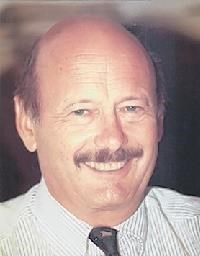
Dr. Joseph Gross provides funding for the Joseph Gross Gallery in honor of his father. Dr. Gross was a Professor of Chemical Engineering at the University of Arizona and served as Head of the Department from 1975 to 1981.
1985
The Centennial Sculpture Award, funded by Marcia and Richard Grand, is started to commemorate the University of Arizona’s Centennial celebration. Each year, sculpture students who are in the UA School of Art MFA program are invited to present proposals for a temporary sculpture installation on campus. John Davis is the inaugural recipient with his “Over the Bridge” sculpture.

2000
The Department of Art formally becomes the School of Art on June 29.
2004
The School hosts the “State of the Art” faculty exhibition, auction and gala.
2007
VASE — the Visiting Artists and Scholars Endowment Lecture Series — begins, bringing diverse artists and scholars from around the globe to our campus for talks at the Center for Creative Photography and workshops with students. The series is still going strong today!
2009
The School of Art presents “Continuum,” an art event to inaugurate the Visual Arts Graduate Research Laboratory and to celebrate the creative achievements of the past, present and future of the School of Art.
2020
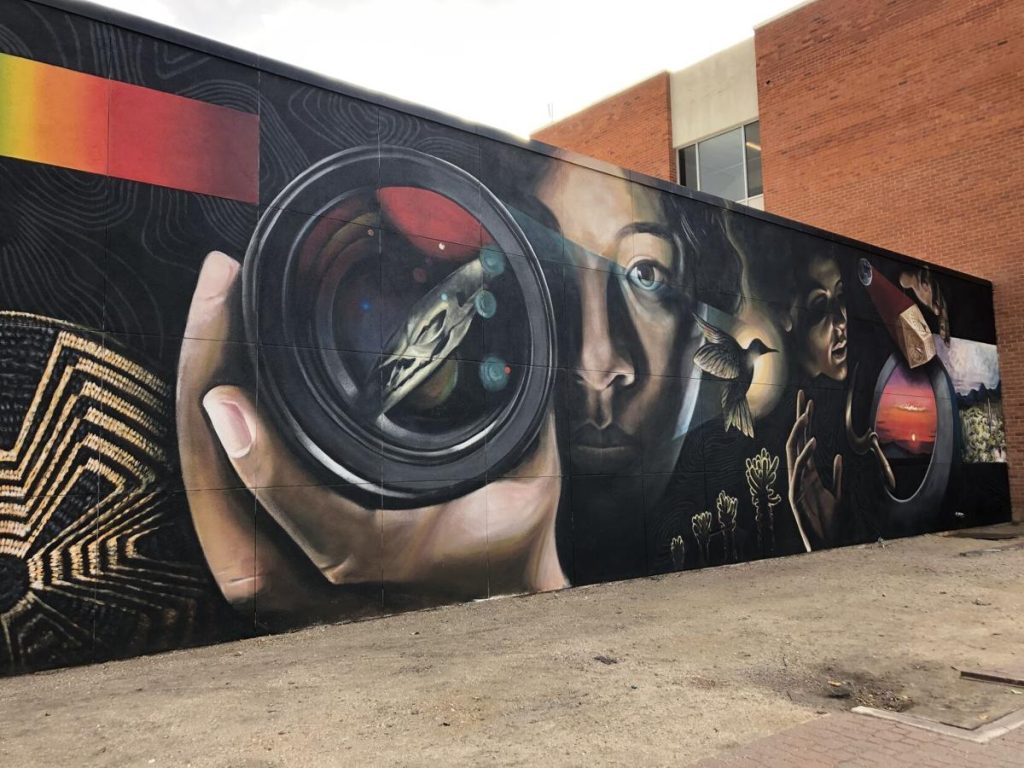
Karlito Miller Espinosa, aka Mata Ruda, completes a mural on the School of Art building that faces Speedway Boulevard.
2020
The School of Art’s Photography, Video and Imaging program is ranked No. 3 nationally for a graduate degree by U.S. News & World Report.
2022
A major renovation project transforms the main entrance to make the school more visible by changing the largely brick entrance to a glass entryway and moving the First-Year Experience studios and Lionel Rombach Gallery, which features student art, to the front of the building. The building also now features “hangout spaces” for students to relax, socialize and collaborate, including an outdoor patio. This space was designed to be flexible enough to easily accommodate presentations, lectures and large events.

2025
Creating a more “communal atmosphere,” the School of Art completes a full interior renovation of the grad studio building. Now called the Visual Arts Research Studios, or VARS, the 25,000-square-foot facility includes a reconfigured gallery, a new seminar classroom and more studio space for graduate students, faculty and visiting artists and scholars.

2026
With the School of Art turning 100 in 2027, students painted a centennial mural in the first-floor hallway. Senior Adrien Able’s winning design was selected during Professor Kelly Leslie’s “Clients in the Community” fall 2025 class.


