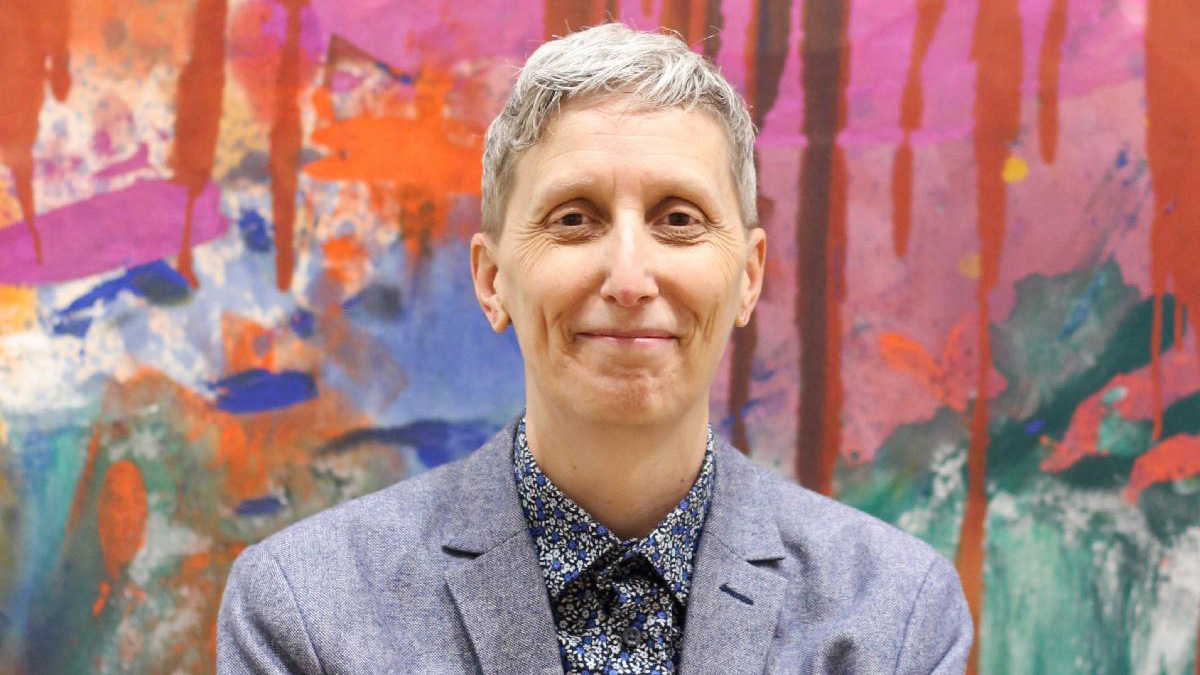
School of Art alumna Chelsea Farrar has been appointed permanent director of the University of Arizona Museum of Art.
Farrar, who had been interim director for the past four months, received her BFA and MA in Art & Visual Culture Education from the University of Arizona in 2004 and 2013, respectively. As a graduate student, she taught classes for the School of Art. At UAMA, she helped mentor School of Art students through internships and workshops as curator of community engagement and assistant curator of education.
“Chelsea held a steadfast commitment to making UAMA a place where everyone is welcome and feels like they belong,” said Carissa DiCindio, associate professor and chair of the school’s Art & Visual Culture Education program. “For AVCE students, her educational programs and community-based exhibitions are models for what a university art museum can achieve, as both a site for learning and a bridge between the university and the broader Tucson community.
“I am thrilled that she is going to lead UAMA as director and excited to see this next chapter for the museum.”

Farrar’s work with community engagement has included programs such as Art Sprouts, a story time and art-making event for children ages 3 to 5; and Mapping Q, an art-making workshop series that invites youth ages 14-24 to explore topics centered on the LGBTQIA+ experience — including self-care, community building and harm reduction. She also has curated community-based exhibitions in UAMA’s Our Stories gallery, working with faculty, artist and local groups to amplify underserved artistic voices.
“I am truly honored to step into the role of director at UAMA, a place that has been my home for the past 10 years in academic and community engagement,” Farrar said. “I am excited to continue fostering connections through art and to explore new opportunities for growth, innovation and creative belonging.”
Arizona Arts Dean Hasan Elahi, in announcing Farrar’s promotion, called her “an accomplished arts leader whose extensive experience, institutional knowledge and deep ties to both the university and the broader community make her exceptionally well-suited for this role.”
“Chelsea brings a clear understanding of UAMA’s significance as a resource for interdisciplinary teaching, student engagement and research,” Elahi said. “Her background will further strengthen the connections between the museum and the School of Art.”
Under Farrar’s direction, UAMA reopened to the public on Jan. 17 after with free admission for all. The policy change came after the museum completed installation of a new, state-of-the-art HVAC system.
“This new approach reinforces UAMA’s commitment to accessibility and public service,” Elahi said. “While campus visitors have long enjoyed free entry, extending this privilege to the wider community removes financial barriers and ensures that UAMA can inspire, educate, and connect people from diverse backgrounds. This shift strengthens the museum’s role in the vibrant cultural landscape of Tucson and Southern Arizona, aligning closely with the university’s land-grant mission.”
During her tenure as interim director, Farrar secured multiple gifts totaling over $500,000 in new philanthropic support for UAMA. “Her ability to build authentic, clear, and caring relationships with donors shows her operational fluency and readiness to guide the museum at scale,” Elahi said.
“Chelsea’s leadership is characterized by integrity, collaboration, and a genuine care for people,” Elahi said. “She has earned the full endorsement of the UAMA staff and has fostered trust across teams through mentorship, accountability and a thoughtful, steady approach to decision-making. Her clear vision for UAMA’s future builds upon existing strengths, positioning the museum for long-term growth and impact.”
Prior to joining UAMA, Farrar taught visual art, art history and theater arts at Amphitheater High School.
Arizona Arts and the University of Arizona Museum of Art contributed to this story.


