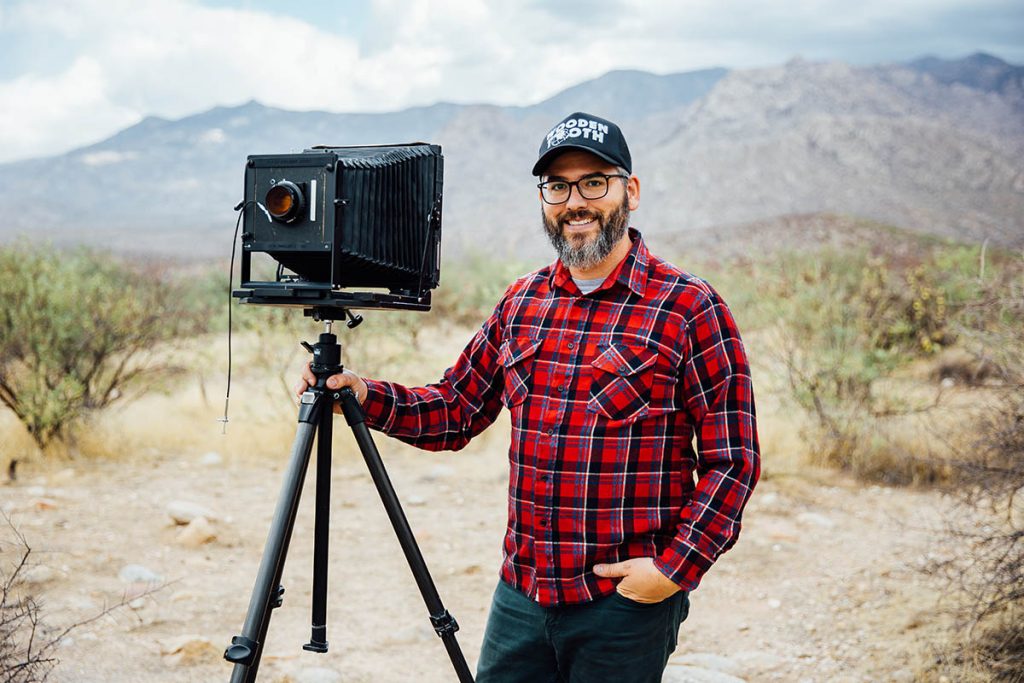
For Kaitlyn Jo Smith, the University of Arizona MFA Studio Art program in Photography, Video and Imaging not only “helped build confidence in myself and my voice,” but it also “encouraged me to set big goals and apply for big shows,” she said.
In turn, it was students like Smith and five fellow alums — part of this month’s “Under the Sun” exhibition at Tucson’s Steinfeld Gallery — who helped faculty build the School of Art PVI program into a national powerhouse with a No. 3 ranking by U.S. News & World Report behind Yale and UCLA.
“I felt a genuine support and care from my faculty and peers, many of whom I am still friends with today,” said Smith, a 2020 MFA alumna and now a lecturer for the school. “It is this nurturing environment that I try to implement within my own classroom. I want my students to feel safe in the exploration of their identities. I want them to experiment and to push themselves further than they thought they could go.”
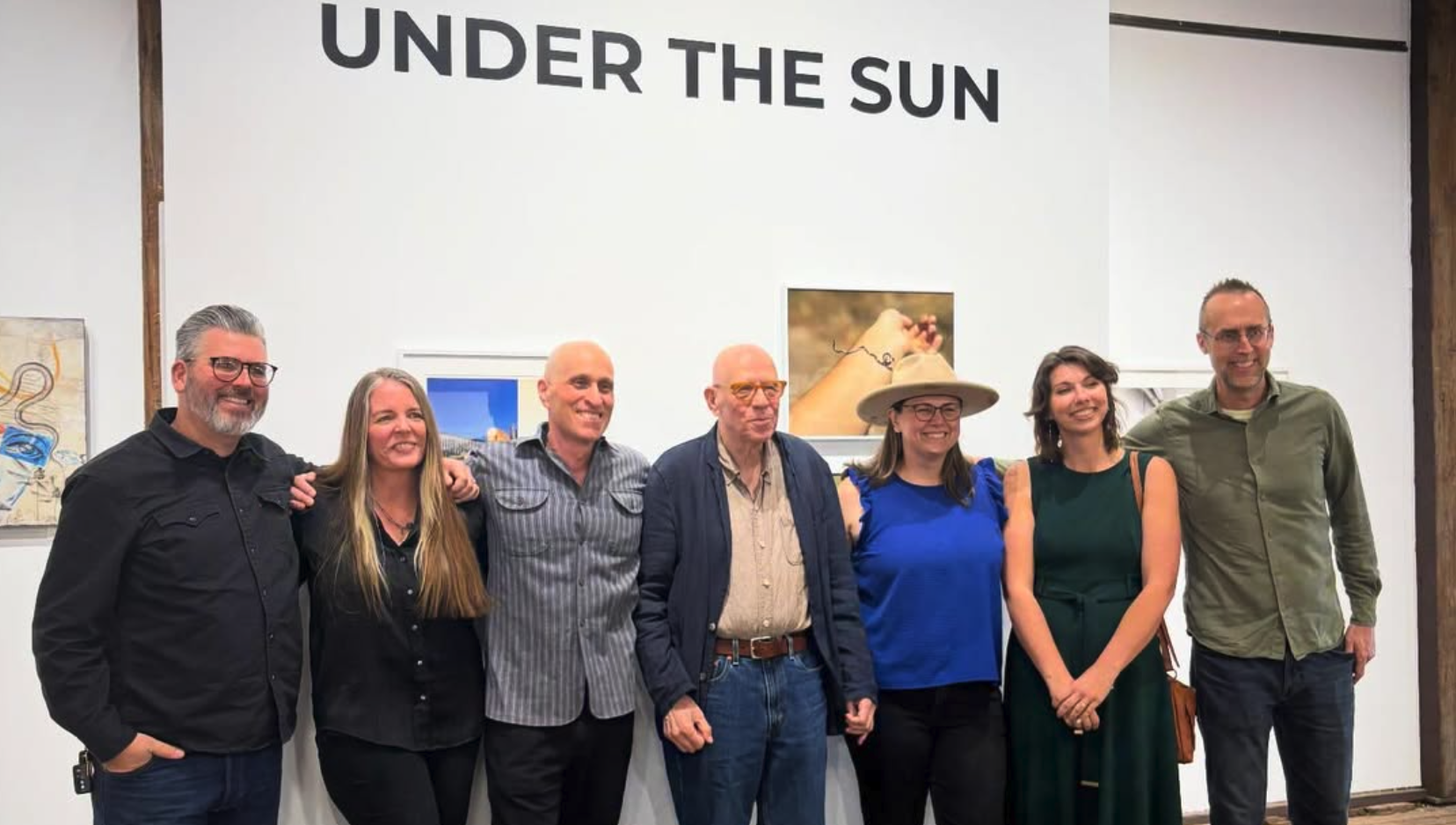
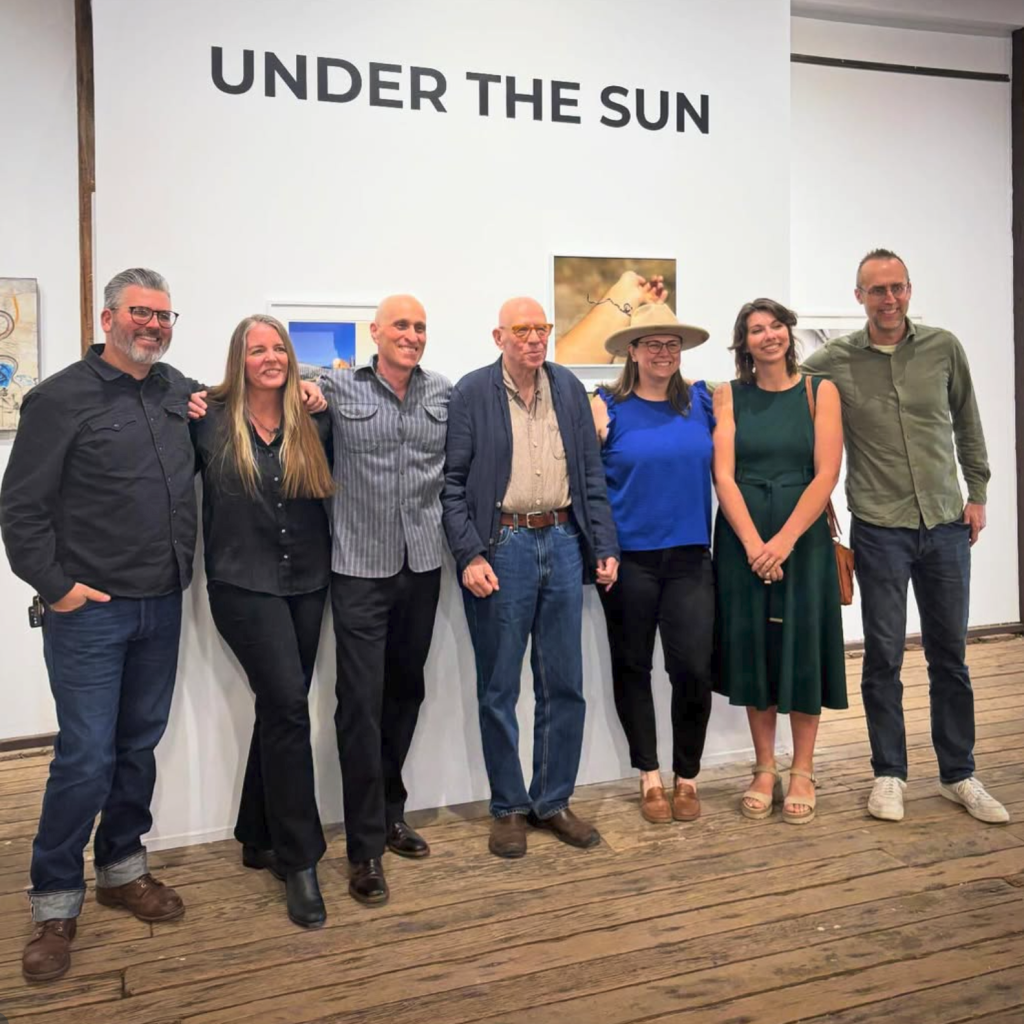
Smith and fellow MFA alums Stephanie Burchett (2018), Daniel Cheek (2013), C. E. Fitzgerald (2018) and Serge J-F. Levy (2015) and Jacinda Russell (1999) will hold an opening reception Saturday, March 7, from 4 to 8 p.m. at the Steinfeld Gallery, 101 W. Sixth Street. The exhibition continues until Sunday, March 29, when the photographers will hold a panel discussion at 2 p.m.

School of Art Professor Emeritus Joseph Labate, curator of “Under the Sun” and a 1986 MFA alum, said the six photographers’ work “has been shaped by study and teaching in the PVI program and reflects a shared commitment to rigorous inquiry, experimentation and critical engagement fostered through university-based photographic education.”
“I am quite proud of the program and my long history in it,” Labate said. “I entered the program as an MFA student and left it as a professor of art. In those early days as a student, I learned of the wide range the medium of photography as art could cover. That extended my previous educational experience and understanding of the medium and showed me the strength of diversity in its practice.”
Labate stressed that the PVI program’s strength begins with faculty — including current Professors Sama Alshaibi, Martina Shenal and David Taylor, Assistant Professor Marcos Serafim and Smith — “whose art practices may be quite different and distinct from their colleagues, yet they still value and respect what those others do,” he said.
“It’s collegiality with diversity and the ability to work toward a common goal, creating a strong program,” Labate said. “This behavior moves to the graduate and undergraduate students and creates an energetic and safe space in which to practice your art.”
It also helps that the internationally recognized Center for Creative Photography is located across Olive Road from the School of Art. “The CCP’s exhibitions, archive, presentations, visiting artists, scholars and opportunities for students are of huge value to the photography program,” Labate said.
In his curator’s statement, he said this month’s group exhibition at Steinfeld not only “highlights a lineage of teaching and learning that has shaped generations of photographers and contributed meaningfully to the field,” but it also is “presented at a time when universities and education in general are under attack.”
“The works on view do not address this political moment directly; rather, the quality and range of their work stand as evidence of what education makes possible: conceptual depth, technical mastery and sustained artistic research,” Labate said.
Here’s a look at the photographers in “Under the Sun”:
Kaitlyn Jo Smith
Bio: Smith’s interdisciplinary studio research examines the socioeconomic impact that emerging technologies have on America’s working class. She is the 2023 recipient of the Alice C. Cole ’42 Fellowship in Studio Art, was longlisted for the 2021 Lumen Prize in Art and Technology (London) and received the College Art Association’s Services to Artists Committee Award for her video Lights Out. Smith has been featured in PDNedu, Art IDEAL, and Al-Tiba9 Magazine. She has presented her work at FEMeeting: Women in Art, Science & Technology (Évora, Taos, and Windsor), Technarte International Conference on Art and Technology (virtual), and Homecoming, Society for Photographic Education Annual National Conference (Denver).
Images she’ll be showing: “A selection from my project ‘Antithesis of a Revelation,’ which was created as a coping mechanism during Covid, the death of both of my grandmothers, my parents’ separation and the loss of my childhood home. While I had been making these images behind the scenes of my public practice for nearly a decade, it did not become clear to me that these photographs come together to tell a larger story of love, loss and acceptance until very recently. ‘Under the Sun’ will be the first time that images from this series will be on display for a larger audience.“
Website: https://www.kaitlynjosmith.com/
Jacinda Russell
Bio: As a conceptual artist with a longstanding interest in edges, borders and topographical extremes, Russell has examined the impacts of human-accelerated climate change in the polar regions since 2017. She works primarily in the mediums of photography, sculpture, installation and bookmaking. Her artwork has been exhibited at numerous locations nationally and internationally, including the southernmost place on earth, the Amundsen-Scott South Pole Station. Born in Idaho, she received her BFA from Boise State University in Studio Art before getting her MFA from Arizona. She currently lives and works in Tucson.

Images she’ll be showing: “My series in the exhibition is titled ‘Art Department, 2013 – present.’ I was born into an Art Department and have spent all but three years of my life there. My father was a painting and drawing professor at Boise State University where, as a child, I watched him grade, helped him rearrange drawing chairs to face the modeling stand, and stared out the windows while he completed administrative tasks. Later, I would attend the same school, switch my major from creative writing to studio art, and enroll in the courses of the professors who had known me since birth. I moved to Tucson for a graduate degree and after seven years as an adjunct instructor, obtained a tenured photography position.
“It was not long before I noticed history repeating itself in the stories my father told and those that I witnessed firsthand. In 2013, I began documenting 66 years in an Art Department from the perspectives of the student and the professor. In Under the Sun, straightforward photographs of the pedagogical environment depict emptiness as a blank slate for creativity, what remains after moving to a new building, an early retirement, a loss of voice, and a resignation.“
How did the program shape her career? “I spent 17 years as an Assistant and Associate Professor at Ball State University in Muncie, Indiana. The professors at UA modeled how I would teach in the future (Harold Jones, Carol Flax, Ken Shorr, Joe Labate, Gayle Wimmer, Ellen McMahon, Barbara Penn, Paul Ivey) as well as nurturing my interests in photography as an object, installation as an art form, and bookmaking — mediums I primarily use to this day.“
Her favorite memories: “All the late night hours spent in front of the color processor. The warehouse studio space off Euclid next to the railroad tracks which smelled like the bread factory. The 30-year friendships. The photo program is special in the way that I am not only close to the people who attended at the same time as me, former mentors, and a handful of students … but I have formed lasting friendships and collaborations with people who graduated long afterward (Camden Hardy through the Postcard Collective, Anh-Thuy Nguyen and Clare Benson were visiting artists at my institution in Indiana, etc.). The element of belonging by association runs deeper than I ever would have thought after graduating in 1999.“
Website: https://jacindarussell.com
Stephanie Burchett
Bio: Burchett is an and educator whose work explores themes of place, identity and environmental infrastructure. She currently serves as the Assistant Chair of the Arts & Humanities Department at Glendale Community College in Arizona, where she teaches photography. Born and raised in Greeley, Colorado, Burchett’s interest in photography began in her youth, inspired by a camera left behind by her grandmother. She pursued a BA in Graphic Arts and Photography from the University of Northern Colorado before earning her MFA in Studio Art from the University of Arizona.
Images she’ll be showing: “A new body of tintype work that documents the tools and makers of Greeley Hat Works, a custom cowboy hat shop in Greeley, Colorado, named Greeley Hat Works. They opened in 1909 and have made custom hats for ranchers and the local community but also for George W. Bush and members of the Yellowstone Cast.“
Her thoughts on the School of Art: “I chose to pursue an MFA so I could teach photography at the college level. The opportunities that I had to teach while pursuing my MFA and working with our faculty who modeled how to balance a life of teaching and making were incredibly valuable. Earning the degree was an essential stepping stone to my current position at Glendale Community College. I am so grateful for the opportunity.“
Her favorite moment at U of A: “Although it’s hard to call it a single memory, one of my favorites is David Taylor’s field research class, which I took during my second year of graduate school. About every two weeks, we would travel to different landmarks throughout the Sonoran Desert. Some of these destinations included San Xavier del Bac, Baboquivari Peak, Ajo, and Pinal Air Park. We camped and spent time together at all hours, traveling, sharing meals, and learning about the local artisans and
communities we visited. I’ll always be grateful for the camaraderie formed with my peers during that experience, and I hold our memories close to my heart.“
Website: https://www.stephanieburchett.com/
Daniel Cheek

Bio: Cheek’s work examines the ways people experience the world around us. Whether working in national parks or museums or in his neighborhood, he is interested in looking for authentic experiences and the ways we directly interact with our surroundings. His work has been exhibited in galleries and museums across the United States. His work was part of a three-person exhibition titled “Great Basin Exteriors” funded by the National Endowment for the Arts and the Western Arts Federation that was shown in fifteen venues throughout Nevada. Daniel’s work was featured in Denver Art Museum’s “Other People’s Pictures: Gifts from the Robert and Kerstin Adams Collection” as well as in “To Bough and To Bend” at The Frederick R. Weisman Museum of Art at Pepperdine University in 2023. He had a solo exhibition at Andrew Smith Gallery in Tucson in 2022.
Artist statement: “Working in national, state, and local parks, as well as public lands, I am looking at the historic and contemporary ways people travel through and experience the outdoors. I am interested in authentic experiences and the ways we directly interact with our surroundings. I believe that through interpretation of the ways we experience places that are considered natural, we learn more about how we want to live in our own environment. When we want to experience nature, we often drive to the nearest park, when we have made our way past the parking lots and visitor centers, we are guided by trails and signs and guardrails. My work looks at this experience and how these types of things may affect our view of what nature is. Where does nature begin and where does the built environment end? What does it mean to be “out in nature” versus just being outdoors?“
Website: https://www.dancheek.com/
C.E. Fitzgerald
Bio: Fitzgerald is an artist who works primarily in self-portraiture. He often photographs himself in inhospitable environments, where he positions his body in awkward poses. His photographs draw attention in equal parts to place and the body. Fitzgerald grew up in New Mexico and currently resides in Tucson after receiving his MFA in photography from the University of Arizona. His work has been exhibited at the Phoenix Art Museum, the Tucson Museum of Art and the Museum of Contemporary Art in Tucson.
Artist statement: “I never imagined myself making self-portraits. Somewhere along the way that all changed. I placed my camera on a tripod, disrobed and stepped in front of the lens. I think about place more than I think about my body. I am drawn to certain spaces like a moth to a flame, or a naked mole to a cholla. There is an awkwardness to many of my pictures, a distilled version of life reflected back at me. Total desperation. Pure vulnerability. That is what I am aiming for.”
Website: https://cefitzgerald.com/
Serge J-F. Levy
Bio: Levy did his graduate work with Frank Gohlke at the University of Arizona and received his MFA with distinctions. He earned his BA in Sociology from Vassar College. Levy’s limited-edition two-volume book, “The Fire In The Freezer,“ won Special Recognition from the Dorothea Lange/Paul Taylor Prize out of Duke University’s Center for Documentary Studies. In 2022, Levy was part of the show “Chasing Ghosts“ at The Vision Gallery in Chandler, Arizona. In 2021 he had work in the Human/Nature show at the Lishui Museum in China. Serge was a Critical Mass finalist in 2020. That year, he was also selected to participate in the Arizona Biennial at The Tucson Museum of Art. Additionally, Levy has exhibited his photography at the Philadelphia Museum of Art, Galerie Friedrichshain (Berlin), the Phoenix Museum of Art, Schroeder Romero Gallery, and The Leica Gallery (New York City and Tokyo) among many other national and international solo and group exhibitions. Levy, a former newspaper and magazine freelance photographer, runs a consulting business for photographers. He writes essays and articles about photography for various publications. And he works with LensCulture as a reviewer and consultant.
Artist statement: “Veni, Vidi, Flevi (I came, I saw, I wept). If I could step back far enough, I’m sure I could see the earth falling off its axis. There’s no need to measure how many meters a glacier has receded, nor personally witness Texas-sized garbage islands floating in the ocean: I hear fewer birds, I see plants marching toward the poles, and I can smell the brown particulate hovering over the remote horizons I walk upon. Civilization is dying, yet somehow humans persist. With each search, swipe and like, black holes of innovation swallow more pieces of our humanity. Landscape falls in there too; it’s a hungry abyss where nothing is spared. The tea leaves frown upon our future. A world where everything—plant, animal, rock formation—was granted citizenship might be slower: perhaps slow enough to give us the time to adapt to our human mistakes. Yet if we granted plants their rightful personhood, we would realize we are pillorying our people. I hang my head even lower in grief for the injustices imposed upon fellow animate beings who share consciousness and feeling. When I look at how we treat each other, it is no wonder how we treat the non-human world. When I look at how we treat ourselves, it is no wonder how we treat each other. So now I travel to the places where my apologies can be heard, alone, with the citizens of the world I believe in.”
Website: https://www.sergelevy.com/