Student’s time as wildland firefighter shapes exhibition

In Alexis Joy Hagestad’s new solo exhibition, viewers can walk through a fictional burned forest, watch a video with a fire map of the western United States and listen to trees moving and creaking in the wind.

“This Forest Remembers Fire” not only explores the effects of fire suppression in the United States in the face of climate change, but it also allows the School of Art graduate student to reflect on the death of her beloved grandmother in 2017, when Hagestad started working as a seasonal worker in Montana battling wildland fires.

“Fire can be remembered in forest ecosystems as both a destructive force and a catalyst for renewal,” said Hagestad, part of the school’s Photography, Video and Imaging graduate program, ranked third nationally by U.S. News & World Report. “I wanted to create a space where people can reflect on fire’s dual nature and how grief — a feeling we all experience as humans — is also part of the lives of other species within our ecosystem.”

Hagestad (she, they) received the school’s 2024 Marcia Grand Centennial Sculpture Prize, which provides an MFA-seeking student with up to $10,000 to support completion of work in the sculptural/3D arts. The annual award is sponsored by Grand, a generous donor who funded the First Year Experience program and other school renovations.

“This Forest Remembers Fire” — on display at the Lionel Rombach Gallery from March 18 to April 18, with a March 21 reception from 4-6 p.m. — features Hagestad’s photographs of isolated, burned tree structures printed on kozo paper and arranged to allow viewers to walk through the space, resembling a forest.

Alexis Joy Hagestad

The installation also features a zine and a video. The zine explores two realities, one where a wildfire has just happened and the other many years after a wildfire. The video presents a fire map created from satellite images of fires that have occurred over the years in the western United States.

The map also includes an audio element: the sounds of trees moving and creaking in the wind, captured using contact microphones. “When layered together, the audio resembles the sound of fire, which I found interesting in the context of a forest remembering fire,” Hagestad said.

Family influence

Growing up in Missoula, Montana, Hagestad witnessed fire season every summer.

“Smoke was constantly present,” she said, so much that it burned her eyes and diffused the sun, transforming the landscape by making it darker.

Her stepfather, Dan Martin, introduced her mother, Monica Martin, to wildland firefighting. The two run Aries Fire Service in Florence, Montana.

Hagestad followed in their footsteps and joined the wildfire effort after graduating with a BFA in Art from the Savannah College of Art and Design in Georgia in 2016.

“After the death of my grandmother (Mary Wasson), to whom I was very close, wildland fire and the community involved in wildfire became a space for me to grieve,” Hagestad said. “And in the wildfire community, you meet some of the best folks around.

“As I worked through my initial grief of losing her and look back on those moments now, I realize that it was just what I needed. Being in that field and engaging in the labor and demands of the job helped me understand myself better and the person I was becoming after her passing. Grief changes you, and I felt like I was growing into a whole new person, a person shaped by her death.”

Thoughtful installation

School of Art Galleries Director lydia see, who helped advise Hagestad during the planning of “This Forest Remembers Fire,” was not only impressed with the grad student’s knowledge of wildfires but also with her sense of empathy.

Slide Image
Slide Image
Slide Image
Prev Next

“Alexis has approached this installation thoughtfully, with deep reverence for the subject matter and keen attention to the experience of the gallery visitor,” see said. “I’m excited for this iteration to be on view in a controlled setting, and then to be pushed outside the gallery walls in other forms in the future.”

Hagestad’s photographic prints depict the trees as isolated forms and stripped of their original locations. “Therefore, they could exist anywhere,” she said.

Meanwhile, the fire map’s images in the video overlay one another to form a new map that visualizes the history of the fires. A red line on the map represents the fire boundary, an average derived from actual fire boundaries combined with online data. “The map was inspired by an Introduction to Cartography class that I took last spring in the School of Geography,” Hagestad said.

Although she admits being “no expert or scientist in the field,” Hagestad said her time working in the wildland — and her childhood spent exploring public lands and national parks with her mom and sister — had a major influence on her artistic research.

“Wildfires are dangerous, especially as homes encroach on natural areas, leading to devastating impacts on communities,” the photographer said. “However, there is such a thing as beneficial and good fire. Indigenous peoples used fire to manage their lands before colonization. Many cultural burning practices were banned after colonization, and suppression became the policy.

“Many researchers in the field realize now that reintroducing Indigenous fire management practices is essential for healthy ecosystems, and using controlled burns can help clear underbrush and promote specific plant growth. These burns can help save our forests from catastrophic wildfires.

“This is also one of the reasons why I decided to title my show, ‘This Forest Remembers Fire’ — because it does. Fire, metaphorically speaking, is written in some forests’ DNA. Just as fire and grief are written in our DNA as human beings, to be human is to experience grief, a feeling we all share no matter our upbringing.”

Growing as an artist

At an early age, Hagestad said her mother “taught us the importance of the natural world” and how “being connected to nature is essential to being human.”

At Big Sky High School in Missoula, Hagestad said three teachers helped push her to grow as an artist and a writer: art instructor Dan Degrandpre, who also taught Hagestad’s mom years before; the late Lorilee Evans-Lynn, a literary magazine adviser; and R. David Wilson, a Spanish teacher who also is an artist. “I wouldn’t be the artist I am today without them,” she said.

At the Savannah College of Art and Design (SCAD), Hagestad learned the importance of creating conceptual projects, which gave her “a great foundation in photography,” she said while praising faculty members Tom Fischer, Zig Jackson, Craig Stevens, Rebecca Nolan and Jacklyn Cori Norman.

In pursuing her MFA, Hagestad chose the University of Arizona School of Art after being impressed by previous and current students in the program and the faculty, including Sama Alshaibi, Ellen McMahon, Yana Payusova, Marcos Serafim, Martina Shenal, David Taylor and Cerese Vaden, along with see. “Their guidance and support have profoundly shaped my voice as an artist.”

“I came to the U of A because I wanted to be part of an artistic community,” Hagestad said. “I’m thankful to have such an amazing and supportive cohort of peers. I genuinely do not know what I’d do without them.”

After earning her MFA, Hagestad hopes to teach at the college level but also to “continue discovering my voice as an artist and keep creating and growing.”

In the meantime, she hopes the people who see her exhibition reflect on how fire plays a vital role in healing ecosystems.

“Learning to co-exist with good fire will ultimately benefit us and the future of our ecosystems,” Hagestad said. “I hope the audience can walk through this fictional forest and recognize that their own grief — whether it stems from the loss of a loved one or ecological concerns — does not make them alone in their healing journey.

“Just as a forest takes many years to renew after a wildfire, so do our personal healing journeys as we navigate our feelings of grief.”

More about the artist

Field-study class sees borderlands with ‘new lens’

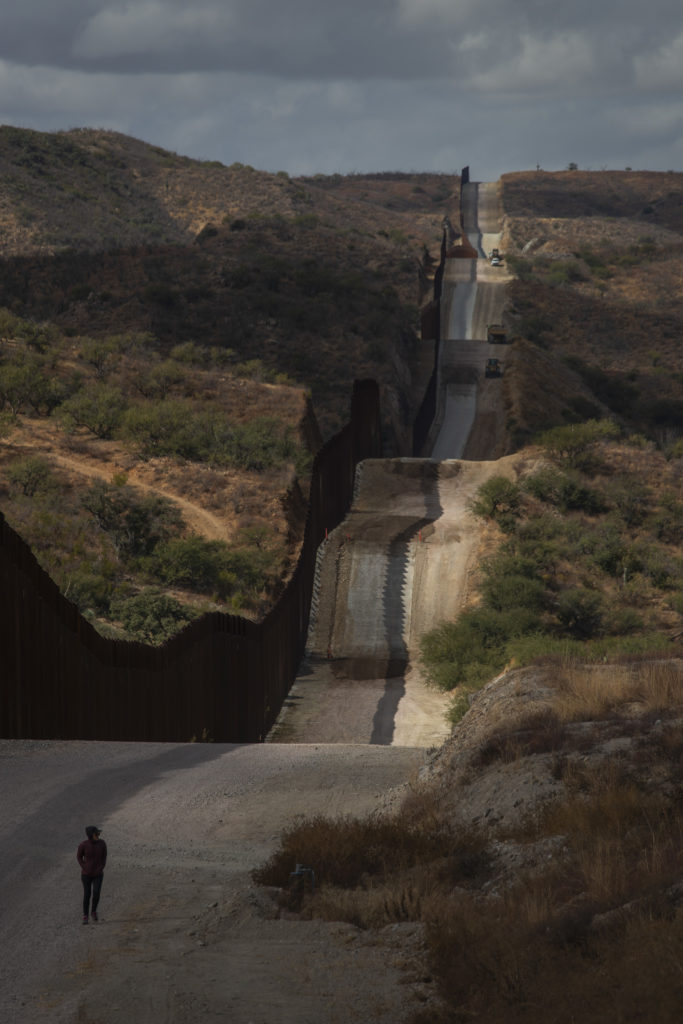
After they found discarded passports near the U.S. border wall with Mexico, graduate students and Professor David Taylor from the University of Arizona School of Art decided to create signs in different languages with the message: “Keep your passport | Guard your papers | Save your identity.”

“In only 15 minutes, we saw some 20 passports from all over the world, from places like Nigeria, Congo, Bangladesh, India and Cameroon,” Taylor said. “It’s a strategy, on the advice of the cartel guides, for migrants to have a better chance at pleading asylum. But border humanitarians maintain there’s no scenario in which that helps people. In fact, you want to have your documentation.”

So, in November, Taylor typeset poster boards in a dozen languages with an accompanying graphic designed by Assistant Professor Nicole Antebi. Some in the class then helped him post the signs at the end of the border wall, east of Sasabe, Arizona.

Professor David Taylor, far right, and graduate students traveled to the border wall in November. (Photo by Colin Blakely)

The project was just a small part of Taylor’s field-study graduate class (ART 504), which lets students explore the Sonoran Desert borderlands and understand its ecology, people, history and narratives.

His fall 2024 course, titled “Border as Network,” included weekend field trips to Southern Arizona and Sonora, Mexico — including the San Rafael Valley, Bisbee and Naco, Ambos Nogales, Patagonia and Hermosillo. Students also visited San Xavier del Bac and barrios in downtown Tucson, toured museums and attended several photography and art lectures.

“I grew up in Tucson and have been to a lot of these places before, but I was really excited to take this class because I wanted to see them through a new lens … and really understand the systems that make up the border,” said Porter McDonald, one of a dozen grad students in the course.

MFA student Andrés Caballero, a Fulbright scholar from Mexico City, took photos in Nogales for an earlier fellowship project about Lucha Libre wrestling. Going on the field trips in Taylor’s class also helped Caballero “put a face” to the borderlands, rather than relying on information from others that could be inaccurate or biased.

Students and Professor Taylor assemble signs at the border. (Photo by Beihua Guo)

“You don’t understand what the spaces truly look like until you’re there,” Caballero said.

At mid-2024, the United Nations Refugee Agency database estimated there were 122.6 million people forcibly displaced worldwide because of persecution, conflict, violence, human rights violations or events seriously disturbing public order — including 37.9 million refugees and 8 million asylum seekers.

“You don’t have a yardstick for global migration until you’re standing at the end of the border wall, and you realize that you’re surrounded by hundreds, if not thousands of passports that people discover,” Taylor said.

The professor typeset signs in Bengali, Italian, Nepali, Sudanese, French, Spanish, Russian, Portuguese, Thai, Lao, Chinese, Arabic and English.

After seeing the discarded passports, a student “said this amazing thing to me,” he recalled. “What does it mean for somebody to travel around the world and shed their identity in this spot?”

That statement helped Taylor realize the emotional impact his class has had on his students — and himself.

U.S.-Mexico border (Photo by Beihua Guo)

“The trips are a real bonding experience for the students,” he said. “It can be very heavy content, but within that, it’s a real joy and privilege to get to work with them.”

Taylor is part of the School of Art’s Photography, Video and Imaging program, which is ranked third in the nation by U.S. News & World Report. He holds the experiential learning course every three or so years.

Students plan to showcase their work from the fall 2024 class in a public presentation, “Border as Network,” Aug. 9-30, 2025, at Pidgin Palace Arts, 1110 S. 6th Ave. The reception is Saturday, Aug. 23, at 7 p.m.

“There’s a lot of writing, photographing and sketching happening,” said Taylor, whose past classes included trips to Tijuana and Winkelman, Arizona, which would have stayed a border town if not for the Gadsden Purchase in 1854, when the U.S. acquired southern Arizona from Mexico.

The field trips help students become “seasoned border travelers” and can inspire future MFA thesis projects — such as those by acclaimed Southwest-based artists Bella Maria Varela (MFA ’21) and Mariel Miranda (MFA ’23), he said.  

The course parallels Taylor’s own research projects. Awarded a Guggenheim Fellowship in 2008, the photographer and now associate dean for the College of Fine Arts has focused on the borderlands’ nature and changing circumstances for over two decades.

In 2023, he helped launch a public archive, “Detained,” containing the stories of asylum-seekers and undocumented migrants incarcerated in Arizona. In 2024, his installation “Complex” also documented the industrialization of borderland security regimes.

“The whole class is about unflattening the narratives of the U.S.-Mexico border and the Sonoran Desert borderlands,” Taylor said, “whether it be environmental, the history of labor and mining, Buffalo Soldiers and their role in the settlement or conquest of the West, or trips to San Xavier del Bac and thinking about Spanish settlement, or going to the barrios in downtown Tucson and learning about urban renewal in the 1970s and the dislocation of the barrios.”

Here’s a closer look at some of the field trips:

San Rafael Valley

Students and Taylor camped here, not far from the border in eastern Santa Cruz County. With rolling hills, native grasslands and oak trees, the valley forms the headwaters of the Santa Cruz River, which flows south into Sonora, Mexico, before turning back north into the U.S. and joining the Gila River.

“The trips are a real bonding experience for the students,” Professor Taylor said. (Photo by Beihua Guo)

“It’s rugged, beautiful and one of my favorite places in all of Arizona,” Taylor said.

For Beihua Guo, a first-year MFA candidate in Photography, Video and Imaging, the San Rafael Valley was his first introduction to the border area.

“The landscape was so serene and pristine that it seemed impossible to associate it with violence or crime,” Guo said. “That night, I also saw the most stunning Milky Way I’ve ever experienced.”

Previously based in Los Angeles and Shanghai, Guo holds a BA in studio art and environmental analysis from Pitzer College in Claremont, California. His work has been exhibited internationally and he’s been awarded artist residencies in Yellowstone, Lassen Volcanic, and Petrified Forest National Parks.

Before the fall semester started, Guo took a self-portrait photo at Jacumba Hot Springs at the California-Mexico border, which was a major crossing point for Chinese migrants in 2023. “I could feel the rising tension and increased surveillance in the area,” he said. “Diesel generators ran constantly, and there were powerful floodlights.”

“I’m interested in continuing to document the evolving political climate and landscapes along the border while exploring my identity as an immigrant,” Guo said.

Camp Naco and Buffalo Soldier Cemetery

For MFA students Semoria Mosley and Maya Jackson, their research interests in Photography, Video and Imaging as well as African-American history intersected perfectly during these two trips, Taylor said.

Students and Professor Taylor check their bearings near the border. (Photo by Lu Zheng)

The Buffalo Soldiers, a group of African American army regiments, fought Native Americans to help settlers move west in the late 1800s and defended the border during the Mexican Revolution at Camp Naco near Bisbee, where students also toured the Copper Queen Mine.

Students also visited a Buffalo Soldier cemetery, about a mile north where they had found the passports. From 1916 to 1921, the black soldiers of the 10th Cavalry were a fixture around the nearby town of Arivaca. Several soldiers were laid to rest in the desert, although there’s no hard evidence as to what killed them. Some historians have said they died from the flu epidemic of 1918.

Jackson, a landscape-based, conceptual photographer from Richmond, Virginia, said it “would be powerful, even on a community level, for more people to have the experiences we had” to better grasp the borderlands’ beauty and challenges.

Mosley, a social justice-oriented photojournalist who grew up in Columbia, South Carolina, said she spent the semester “trying to understand the desert from a spiritual point of view — how it’s continuously rebirthing itself and going through these renewal cycles.”

“It’s interesting how the animals, desert and water — and the cities built around them — are being altered forever,” Mosley said.

Hermosillo, Sonora

Students visited massive aquaculture projects, including where they cultivate fish and camarones, in Hermosillo. “The class saw the places where they terraform the desert to let the sea into the desert,” Taylor said. “We literally went and had seafood in the afternoon on the beach.”

Students soak up the scene in Hermosillo, Sonora. (Photo by Beihua Guo)

The class met students from Unison — the University of Sonora — took an architecture tour and heard how the campus operates.

“They also saw some incredible photography exhibitions there,” Taylor said. “They toured the Ford Maquiladora factories, where all the Mavericks and Broncos that you see in U.S. dealerships. And they met the people who inspect the car carriers before they come across the border to make sure drugs aren’t being smuggled.”

Patagonia

During their final trip, students visited Patagonia, about 50 miles south of Tucson, where the Borderlands Restoration Network is located and retired University of Arizona research scientist Gary Nabhan has a five-acre homestead.

The Borderlands Restoration Network, which includes a wildlife preserve, aims to help rebuild healthy ecosystems, restore habitat for plants and wildlife and reconnect border communities to the land through educational programs.

Alexis Joy Hagestad, a Photography, Video and Imaging MFA student from Missoula, Montana, was intrigued by the animal crossings at the border, along with bats and butterflies who’ve seen their migration paths to and from Mexico affected by the border wall.

Professor Taylor and students talk with renowned research scientists Gary Nabhan in Patagonia. (Photo by Lu Zheng)

Hagestad, whose recent project involves using photography and digital imaging techniques to isolate the bodies of burned trees from old fire scars, said meeting Nabhan at his homestead “was really a transformative experience for me.”

“He has so much wisdom and so much hope,” Hagestad said about Nabhan, a renowned Southwest agricultural ecologist, ethnobotanist and author who is considered a pioneer in the local food and heirloom seed-saving movements.

In his 2024 book, “Against the American Grain: A Borderlands History of Resistance,” Nabahn wrote about “how cultural resistance — aside from political action — needs to occur whenever the dominating forces of industry, governance or media oppress or suppress the very people most in need.”

“I sometimes forget that hope is something I can feel,” Hagestad said on the final day of class, a roundtable discussion in the School of Art building. “We can make differences in a certain way, regardless of the situation.”

After comments like that one, Taylor paused to reflect on the semester.

“I can’t begin to express the gratitude and the honor I feel to have spent these shared spaces with you,” he told the students.

“It’s a real joy and privilege to get to work with” the students, Professor Taylor says. (Photo by Colin Blakely)

Renovated grad studios sport new gallery, spaces to interact

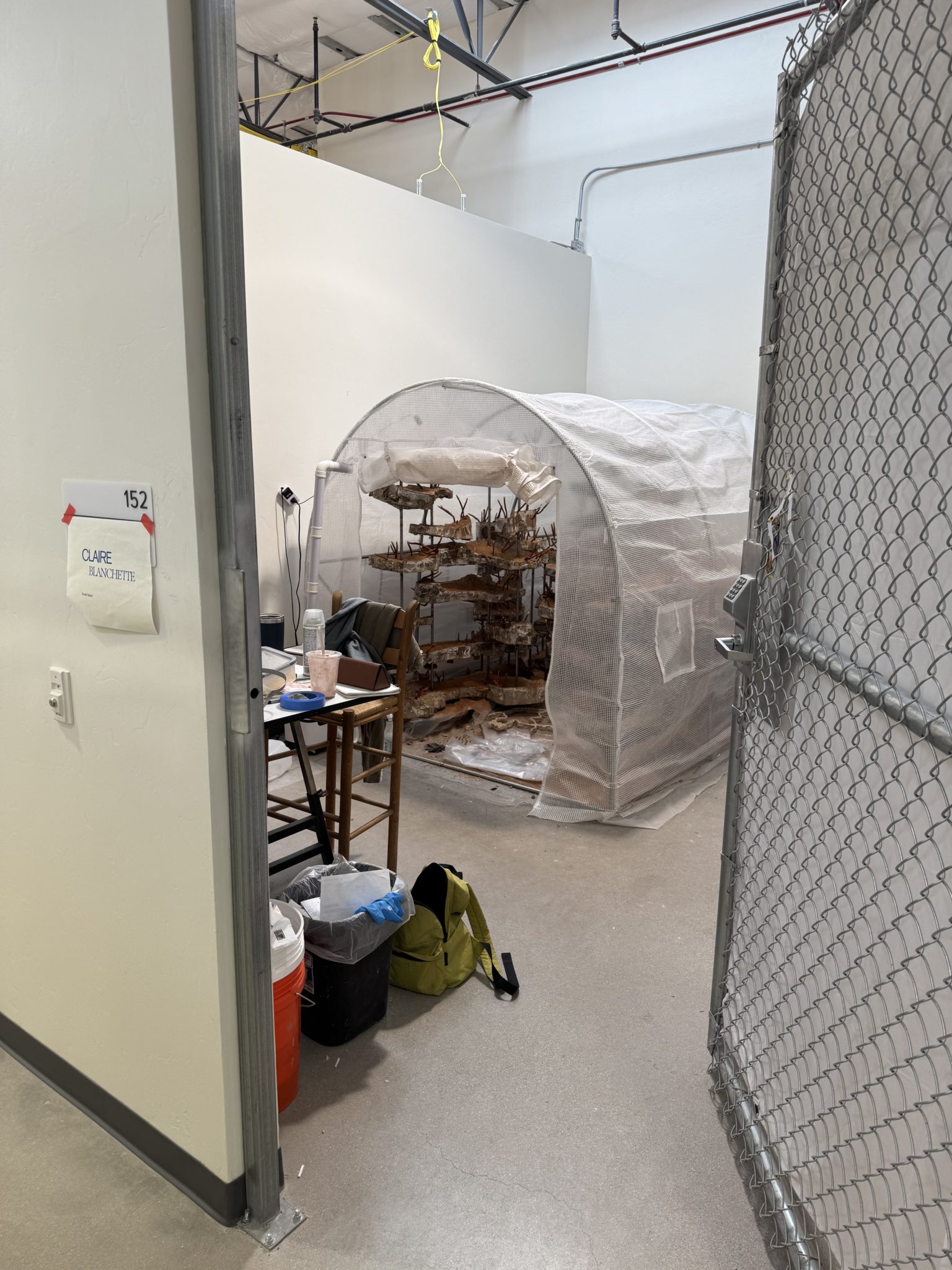
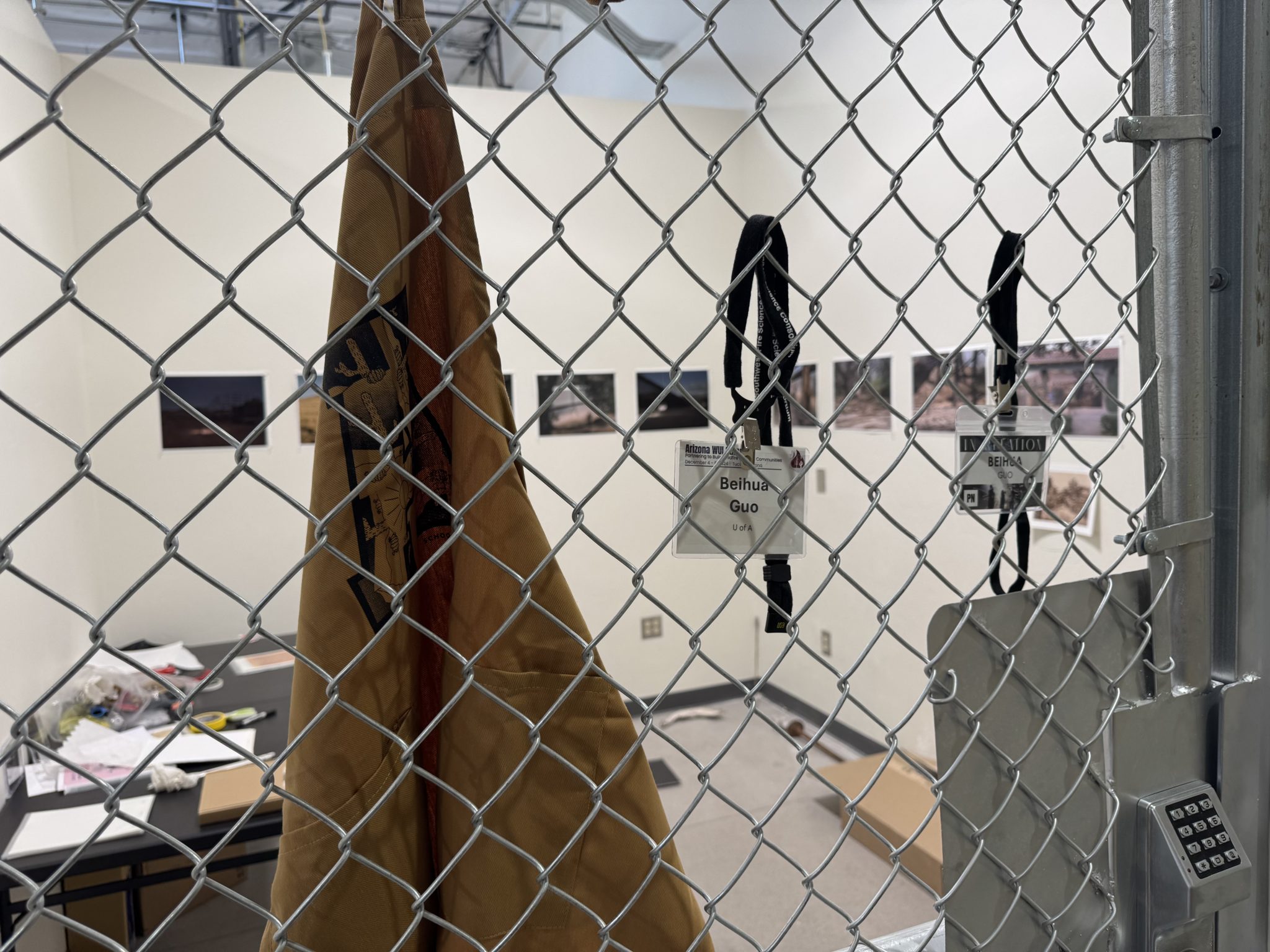
Creating a more “communal atmosphere,” the School of Art has completed a full interior renovation of the grad studio building.

Now called the Visual Arts Research Studios, or VARS, the 25,000-square-foot facility includes a reconfigured gallery, a new seminar classroom and more studio space for graduate students, faculty and visiting artists and scholars.

The public is invited to see the studios and facility on Saturday, April 5, from 3 to 5 p.m., followed by a closing reception from 5 to 6 p.m. for “Influx” — an exhibition featuring work from 18 MFA students in the new VARS Project Space gallery. VARS, 1231 N. Fremont Ave., is just north of Speedway and the School of Art’s main building.

“I am incredibly excited about the renovation,” said Yana Payusova, assistant professor of practice for the First Year Experience program. “It’s fantastic to have a bright, freshly painted new studio with great lighting and soaring ceilings.

“I also appreciate being able to work alongside fellow faculty members and our wonderful graduate students. The communal atmosphere of the space is truly inspiring.”

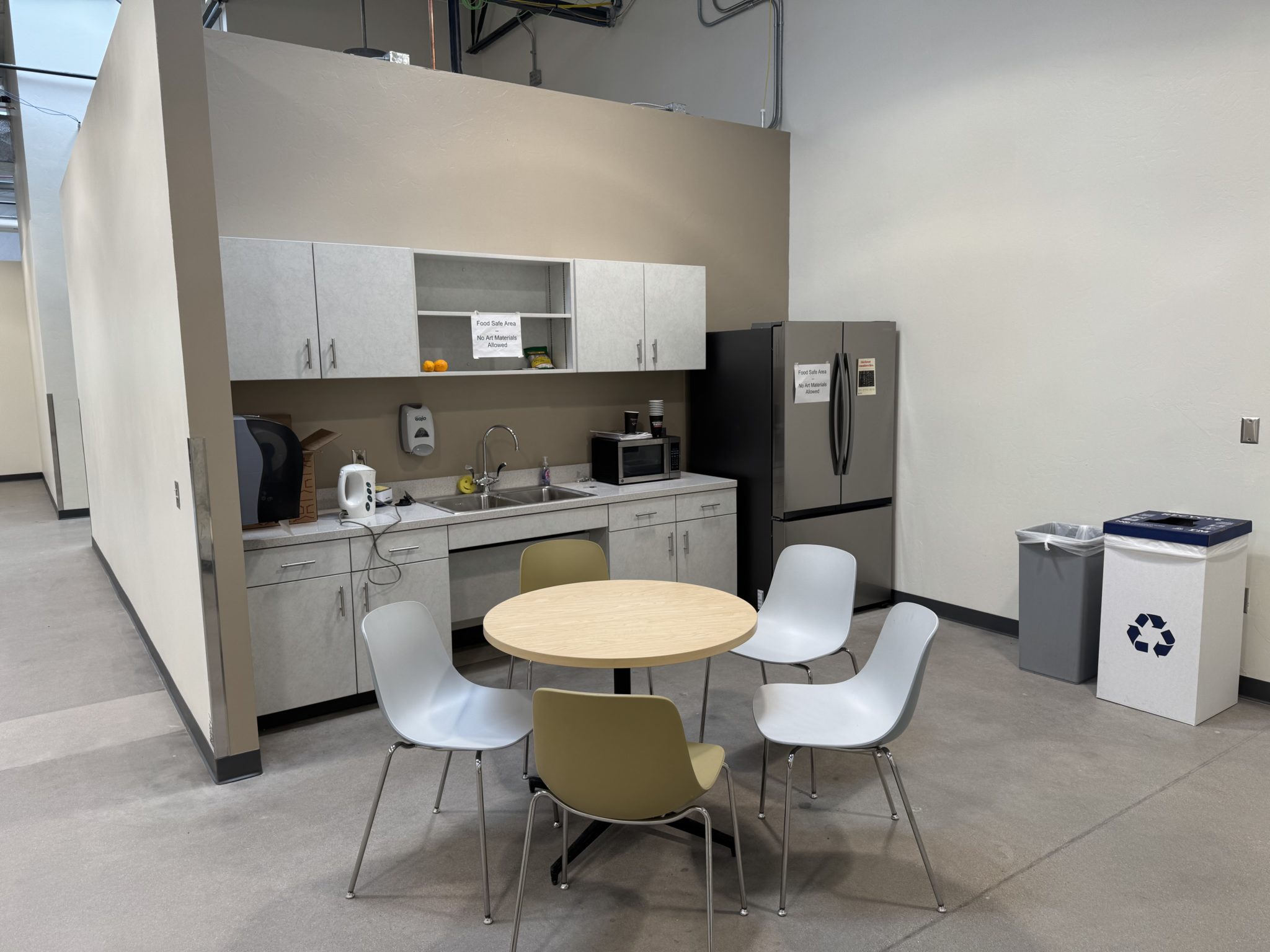
The grad building now has 53 studio spaces, including six AV studios, and new features such as a paint booth, a sleek break room and other areas to sit and relax, two gender-neutral restrooms and a lactation space. The Book Art and Letterpress Lab, in the northeast corner of the building, received some lighting upgrades.

“The additional studios incorporate various configurations to better serve graduate students working in all media,” School of Art Director Colin Blakely said. “The added faculty studios add an extra layer of opportunity for interaction. It’s a safe, secure and ventilated building and a convenient asset to our program.”

A major gift from a donor funded most of the renovation.

VARS Project Space (gallery)
Student studio
Student studio
North lobby
North lobby
Seminar room
Seminar room
Student studio
Student studio
Break room
Break room
VARS Project Space (gallery)
Prev Next

Beihua Guo takes 2nd in Grad Slam with ‘Ground Zeros’

University of Arizona School of Art student Beihua Guo captured second place in the campus-wide Grad Slam contest with his presentation, “Designated Ground Zeros: Documenting Cold War Nuclear Targets with Uranium Prints.”

Guo, a first-year MFA candidate in the school’s Photography, Video and Imaging program, vied with five other finalists for the best three-minute graduate student presentation of a research, creative or community engagement project.

From right: Beihua Guo (2nd place), Mourad Abdennebi (1st) and Mudith Weerabaddanage (3rd)

He received $2,000 in prize money from the Office of Research, Innovation and Impact, which co-sponsored Grad Slam along with the university’s Graduate Center.

Guo’s “Designated Ground Zeros” project examines 368 nuclear targets in China identified by the United States Strategic Air Command in “The Atomic Weapons Requirements Study for 1959.” So far, Guo has photographed 49 of the targets, and his goal is to take images of all of them and publish a book on the topic.

He printed his photographs using uranium salts as the photosensitive material. Called uranotypes, the images are sepia-colored and juxtapose history with a medium that not only speaks to “the danger of nuclear weapons or how landscapes change over time,” Guo said, “but also of Western imperialism in China, because many of the sites I’ve photographed were built by colonizers, and they still stand today.”

“As an artist, I feel a responsibility to address these pressing issues and inspire social change,” he told the audience. “My uranium prints may not convince world leaders to dismantle nuclear warheads or undo the history of colonialism in China. But they serve as an invitation for us all to reflect on the violence embedded in the landscapes around us. From nuclear targets in China, to the Titan missile silos here in Tucson.”

Guo grew up in Shanghai, China, and received his BA in studio art and environmental analysis from Pitzer College in Claremont, California.

“Beihua’s work deals with sophisticated and important concepts,” School of Art Director Colin Blakely said. “His Grad Slam presentation did an outstanding job using storytelling and personal narrative to make those concepts accessible in a poignant and ultimately powerful way.”

This installation, part of Beihua Guo’s “Designated Ground Zeros” project, appeared in January’s “Nice to Meet You” first-year MFA exhibition.

Fellow School of Art graduate students, Blakely and other faculty cheered on Guo during the Feb. 5 competition at the School of Music’s Holsclaw Hall.

“I was thrilled to see so many faculty and fellow grad students come to support me,” Guo said. “Their presence really helped relieve my stress, and seeing their smiles in the audience gave me so much confidence on stage.”

Leading up to the Grad Slam finals, Guo presented part of his project in a January installation at the “Nice to Meet You” exhibition for first-year MFA students at the Lionel Rombach Gallery.

“I highly recommend this opportunity to all grad students in the School of Art,” he said. “Elevator pitches and shorter presentations are becoming essential at conferences and exhibition openings, and this experience really helped me improve in that area.”

Mourad Abdennebi, a doctoral candidate in Second Language Acquisition and Teaching Graduate Interdisciplinary Program, took the grand prize with the presentation, “Multisensory Vocabulary Learning.” Geosciences PhD candidate Mudith Weerabaddanage finished third with “Reading Corals: Unraveling the Mysteries of Ocean History.” The other finalists were Elizabeth Brown (MS, Clinical Research), Eka Oktavia Kurniati (PhD, Civil Engineering) and Hosain Heshmati (PhD, Education Psychology).

“Grad Slam didn’t feel like a competitive environment. All the participants were incredibly friendly and supportive,” Guo said. “I also learned so much about exciting research happening across other colleges and departments.”

Fellow grad students and faculty supported Guo at Holsclaw Hall.

He began refining his presentation even before signing up for the contest. As a member of the prestigious 2024–25 University Fellows cohort, Guo had to give a three-minute presentation in a colloquium class last semester. He also had plenty of practice with longer presentations in School of Art Professor Ellen McMahon’s “Contemporary Art Concepts and Issues class.”

During Grad Slam’s  preliminary and semifinal rounds, he honed his presentation even more based on feedback from the judges. In the finals, the judge’s panel featured executives Susan Dumon (Sun Corridor Inc.) and Kelly Huber (Marshall Foundation) and John-Paul (JP) Roczniak, University of Arizona Foundation president and CEO.

“One of the biggest skills I gained was learning how to communicate my art and ideas to a non-specialized audience,” Guo said. “This will be valuable when I start teaching introductory-level classes or collaborating with researchers from other disciplines.”

Art and medicine: Helping tomorrow’s doctors

For future physicians Sabrina Ferrari and Thomas Brower, getting the chance to analyze paintings and sketch one with their peers helped them see the importance of observation, interpretation, communication and empathy when treating patients.

During the last four weeks of the fall 2024 semester, over 100 first-year College of Medicine students engaged with art in an innovative medical humanities workshop at the University of Arizona Museum of Art — the brainchild of School of Art graduate student Amy Hu and UAMA assistant curator and alumna Willa Ahlschwede, who’ve co-led the sessions for the last three years.

“The workshop revealed to me the significance of never overlooking even a single detail about a patient,” Ferrari said, while Brower added, “it showed me how clear and effective communication with our patients can be crucial to building trust and improving health outcomes.”

Workshop co-founder Amy Hu (left) gives encouragement during the drawing activity.

That kind of feedback brings joy to Hu, a clinical assistant professor in Psychiatry and the director of Medical Humanities for the College of Medicine, as she pursues her M.A. in Art History. She helped start the workshops to show students “there’s no single way of practicing medicine.”

“There’s been a growing trend in medical education to utilize the humanities, but it’s really been more focused on narrative medicine,” Hu said. “There hasn’t been as much focus on utilizing the cultural arts, so I thought this is something that I really would like to explore.”

Hu is a graduate of the U of A psychiatry residency program. She received her medical degree from Indiana University, and her B.A. in Art History and a B.S. in Biology from Purdue.

At a recent workshop session, Hu prepped 20 medical students in the museum’s first-floor seminar room by talking about the late French historian and philosopher Michel Foucault. He developed the concept of “the medical gaze” — the act of selecting what is relevant from a patient’s story and body and filtering out what is considered irrelevant.

“Part of the work is thinking about how we look and perceive information, and all the things that may affect that process — our biases or prior experiences,” Hu told the students. “I want to encourage you all to become a little bit more aware of your subjectivity.”

Workshop co-leader Willa Ahlschwede (right) discusses Robert Colescott’s “Beauty Is Only Skin Deep” with students.

Moving to the museum’s second-floor gallery, Ahlschwede instructed the group to analyze two paintings: the surrealistic “Tenemos” (1980), an eerie, figural scene with animal imagery by Leonora Carrington; and the satirical “Beauty is Only Skin Deep” (1991), by the late Robert Colescott, a School of Art Regents professor whose garish works often referred to race and racism and pride and prejudice.

Students took a few minutes to quietly gaze at the paintings before discussing them as a group. “I appreciated having a moment of deep contemplation,” Ferrari said. “It made me realize how rare it is to replicate those moments when digesting new information from a patient. Oftentimes, there is so much background noise and other tabs open in our minds that take away from fully focusing on the person in front of us.”

In art, the meaning of a painting can be subjective, Ahlschwede told the future physicians. In medicine, she asked them, “Is there always a right answer with a patient or situation?” Most agreed every situation is different.

“Hearing my peer’s different interpretations of the two paintings was an important reminder to maintain a balanced and nuanced perspective,” Brower said. “Many of us had arrived at different conclusions when looking at the same paintings. Similarly, two physicians viewing the same patient may focus on different aspects of the disease presentation and can potentially arrive at different diagnoses.”

Sabrina Ferrari (left) gets drawing instruction from a partner.

As Ferrari sat and scanned each inch of the paintings, she noticed each had a different color scale, cultural background, theme and medium.

“This is how each patient we will see will present. If we blink, we might miss a critical factor,” she said.

Next, students undertook a drawing exercise, in which they had to sketch a piece of artwork in the gallery — and “move outside their comfort zones,” said Ahlschwede, who received her M.A. in Art and Visual Culture Education and a certificate in Museum Studies from the U of A School of Art in 2017.

Armed with a clipboard, paper and a pencil without an eraser, students took turns with a partner being the describer and the artist — with the artist facing away from the piece. For Brower, “it was challenging both to describe the painting to my peer and to receive instructions without seeing it.”

Thomas Brower describes a piece of art to a colleague.

He saw a parallel with being a physician. “At times we will be the drawer: listening to patients describe their symptoms and trying to piece that together into a collective whole,” Brower said. “At times we will be the describer: explaining a complex disease process to patients in a way they can understand.”

At first, Ferrari said her partner tried describing a painting by giving an overview of its full design and then breaking it up into smaller pieces. “The second time, her approach was to walk me through each detail of the painting, guiding the direction of my pencil. This surprisingly worked extremely well for us. It showed me … we should remain open to viewing problems from several angles.”

Ultimately, Brower said the activity “exposed some of the challenges we’ll face with our patients and the need to improve our communication.”

Communication, especially when it involves medical jargon, “can be quite tricky” for patients, Hu said. “As a doctor, you can use a word to describe something, and then you find out it may mean something different for the patient.”

In the future, Brower and Ferrari hope to draw on the workshop skills in their medical education and residencies, fellowships and careers.

Willa Ahlschwede (right) goes over Leonora Carrington’s “Tenemos” with students.

“Patient education, clinical research and community outreach are all important aspects that I hope to incorporate into my practice,” Brower said, while Ferrari added: “I want to be a physician who’s not afraid to ask my colleagues or patients for insight so that I can provide the best-tailored care.”

Brower grew up in tiny Phoenixville, Pennsylvania, outside of Philadelphia, where he became interested in medicine after struggling with an immune disease that doctors helped treat and “restore my sense of self.” He did volunteer work with patients living with Alzheimer’s disease while earning his B.S. in Neuroscience and a B.A. in the History and Philosophy of Science from the University of Pittsburgh.

“One of the lessons I’ve come to appreciate is the importance of recognizing disease, injury and disability as natural parts of the human experience,” said Brower, who works in his spare time at the National Ability Center in Park City, Utah, teaching adaptive ski techniques to those with intellectual disabilities and physical or sensory impairments.

Ferrari was born in Tucson to immigrant parents from Brazil and Italy and grew up in nearby Marana, where she was “blessed to have exposure to medicine early … when my mother became a nanny for the children of a gastroenterologist and a trauma surgeon,” she said.  

Amy Hu (right) wraps up the workshop.

“My mind is still open to the many possibilities that medicine offers, as each part of the human body is so fascinating,” Ferrari said. “I’m intrigued by psychiatry and neurology, especially the intersection between the two. The great need for an increase in mental health availability for all people, especially the underserved, remains a barrier I want to address in my practice.”

Ultimately, Hu hopes medical humanities workshops will help the physicians of tomorrow break down more barriers in patient care.

As she wrapped up the session back in the museum’s seminar room, Hu told students:

“You must try to understand from the patient what they’re trying to describe, which can make about as much sense as someone trying to describe an abstract painting.

“You must really use your imagination as a doctor and put yourself in their shoes.”

Two medical students participate in the drawing activity.

Students explore STEAM practices in ‘ArtMachines’ workshop

Under the guidance of Assistant Professor Ilayda Altuntas Nott, Art and Visual Culture Education students immersed themselves in a computational art-making, sensory-based learning experience — emphasizing the arts in STEAM (Science, Technology, Engineering, Arts and Mathematics) practices.

The fall 2024 workshop, “ArtMachines: Drawing, Feeling, and Resounding,” invited the AVCE students to explore the intersections of creativity, digital and material experimentation in ARE 431/531.

Collaborative Inquiry: The Artistic Exploration of Ziyu Feng and Lei Wang

Students Ziyu Feng and Lei Wang demonstrated the power of collaboration and experimentation in their drawing machine project. Starting with a vision to create randomness in their artwork, the duo tackled challenges like motor assembly and design stability. Through trial and error, they incorporated small motors, cups, and switches to bring their machines to life, producing abstract patterns that celebrated the unpredictable.

Their innovative use of materials, including Chinese ink and acrylic paint, highlighted the creative potential of STEAM practices in art education. By layering colors and utilizing the mechanical movements of their machines, Ziyu and Lei showcased how art and technology can merge to create dynamic and thought-provoking results. Their iterative tinkering process emphasizes the value of hands-on experimentation in fostering creativity and problem-solving, reinforcing that exploration is a critical part of learning (Justice, 2016 & Resnick, 2017).

Kasey Hilton: Art, Experimentation, and Familial Collaboration

For Kasey Hilton, the workshop became an interdisciplinary exploration that extended beyond the confines of the classroom. With household items like plastic cups, duct tape, and markers, Kasey constructed multiple drawing robots, even involving her kindergartener and spouse in the creative process. Her robots, equipped with motors and weights, operated across expansive sheets of paper, resulting in distinct and vibrant patterns.

Kasey’s methodical yet creative approach to tinkering embodied the essence of STEAM, integrating problem-solving with artistic inquiry. The interactive motion of her robots, akin to a “dance party,” exemplified how STEAM initiatives can cultivate creativity and foster meaningful connections between artistic practice and everyday life. Activities like these encourage learners to iterate, explore, and develop a deeper understanding of concepts through active engagement (Justice, 2016; Resnick, 2017).

Photos from the workshop

Slide Image
Slide Image
Slide Image
Slide Image
Slide Image
Slide Image
Slide Image
Slide Image
Slide Image
Prev Next

Kiara Imblum: The Pedagogy of Tinkering and Experimentation

Kiara Imblum’s mark-making machine demonstrated a comprehensive engagement with the pedagogical process of experimentation. Initiating with a conceptual framework centered on motion-based art, Kiara developed a drawing robot that underwent numerous iterative design modifications. From extending fan blades to stabilizing markers with rubber bands, her iterative process underscored the pedagogical significance of persistence and complex problem-solving.

Kiara’s reflections highlighted the classroom as a dynamic space of collaborative inquiry, where students engaged in the exchange of ideas and collective learning. Her experience illustrated how engaging with STEAM concepts through tinkering fosters critical thinking and promotes innovative pedagogical approaches in art education. This aligns with Justice and Resnick’s assertion that tinkering allows for the development of critical thinking skills by encouraging learners to engage deeply with materials and processes (Justice, 2016; Resnick, 2017).

Anne Arvizu’s Exploration of Tinkering in Art Education

Anne Arvizu demonstrated her approach in the workshop, emphasizing the intersection of art, motion, and experimental learning, thereby facilitating participants’ engagement with hands-on pedagogical exploration. Anne’s process began with an inquiry-based mindset, fully engaging in the concept of “tinkering”—an iterative cycle of experimentation and analysis. Reflecting on her journey, she articulated her iterative approach, describing how she ‘engaged in exploratory practices and systematically documented observations,’ subsequently revising her methods when initial attempts did not yield optimal outcomes. This iterative approach underscored her capacity for adaptation and innovation, which are essential traits in both art education and broader educational practices. Her experimentation with motors and markers functioned as a practical framework for problem-solving and applied critical thinking. Starting with multiple motors and markers, Anne quickly realized the setup was too heavy, prompting adjustments. Through experimentation, she discovered that a single motor and carefully balanced marker placement allowed the machine to create captivating circular patterns. Each adjustment, from reducing weight to perfecting marker contact with the paper, demonstrated her academic resourcefulness and persistence.

Ultimately, Anne’s ArtMachine achieved a result that exceeded her expectations. “Even though it was not what I originally planned, it was still successful in many ways,” she reflected. This experience underscored the importance of resilience, creativity, and a willingness to learn from every step of the process. Anne’s narrative serves as an exemplary model for students and educators, illustrating the pedagogical power of experimentation in unveiling new dimensions of creative inquiry. Her journey emphasizes that educational success is often rooted not in the flawless execution of a plan, but in the reflective learning that occurs throughout the process.

The Role of STEAM Pedagogy in Fostering Creative Inquiry

Assistant Professor Altuntas Nott integrates these pedagogical approaches into the classroom, addressing a significant gap in contemporary art education. These practices, already explored in other states and institutions, position the arts as a critical nexus for STEAM engagement, computational art-making, and sensory integration. By facilitating students’ experimentation with motors, markers, and innovative materials, art acts as a catalyst for the intersection of creativity and technology. The success of the workshop demonstrates the efficacy of integrating theoretical frameworks with practical application in STEAM-focused art education, inspiring students to engage in critical thinking, effective collaboration, and the exploration of novel creative possibilities. Tinkering functions as an essential pedagogical strategy for enhancing student learning through meaningful, process-oriented exploration (Justice, 2016; Resnick, 2017). This experiential methodology equips future educators with the competencies needed to integrate interdisciplinary practices into their classrooms, while also fostering an appreciation for the value of experimentation and innovation. As demonstrated by the projects of Ziyu, Lei, Kasey, Kiara, and Anne, the confluence of art and technology has the potential to cultivate creative intelligence and drive innovative thought processes.

References

Justice, S. (2016). Learning to teach in the digital age: New materialities and maker paradigms in schools. Peter Lang. 

Resnick, M. (2017). Lifelong kindergarten: Cultivating creativity through projects, passion, peers, and play. MIT Press.

Videos from the workshop

Arizona Biennial features 3 grad students, 9 alums

University of Arizona School of Art graduate students Triston Blanton, Austin Caswell and Matthew Kennedy and nine alums are among the 41 artists selected for the 2024 Arizona Biennial at the Tucson Museum of Art and Historic Block.

A record 560 artists submitted their work for the 38th Arizona Biennial, which showcases some of the state’s most innovative artists and runs from Oct. 19 to Feb. 9 at TMA, 140 N Main Ave.

“I was thrilled to see Triston, Austin and Matthew listed among those exhibiting at the Biennial,” said School of Art Professor Gary Setzer, a 2023 Arizona Biennial artist. “I think all three are making really important work, and I’m proud of them for being recognized outside of the university.”

Here’s a look at the three students and their Biennial installations:

“Mixed Signals”
Triston Blanton (center)
Prev Next

Triston Blanton (They/He)

Title: “Mixed Signals”

Description: The ceramics sculpture addresses ideas of queer identity building through the combined use of both built and found ceramic elements.

Quote: “The found elements are smashed and then reassembled into the sculpture as shards and fragments. My sculpture queers the ceramic process by forgoing any traditional ceramic building methods and is held together only by fragile glaze.”

Bio: Blanton (b. 1999, Florence, SC) is a multimedia artist who works in Tucson. They received their BFA from Coker University in Hartsville, South Carolina, in May 2022 and are studying in the Studio MFA program at the University of Arizona.

Instagram: @triston_l

“The Finder”
Austin Caswell
Austin Caswell
Prev Next

Austin Caswell

Title: “The Finder”

Description: The installation is a speculative, future archaeological site that uses lifespans of plastics to seek meaning and knowledge within lost contexts, including playground slides found around Tucson. Among the other materials, as recounted on Caswell’s website, are: scrap rebar, Palo Verde branches, a shark tooth from Cape Hatteras (N.C.), Nike running shoes found under a bush near campus, a serenity prayer gold chain necklace found in Hollywood, fragments of a dinosaur bone from a dig site in Southern Utah — and “an In-N-Out french fry from under my car’s driver seat.”

Quote: “My practice explores contemporary consumer culture, material poetics and speculative fictions through the conduits of sculpture and installation. ‘The Finder’ investigates concepts of deep time, particularly non-human scales of time, to look at the possibility that plastics will not return to the earth due to their chemical makeup and considers them as objects fixed in a state of immanence.”

Bio: Caswell (b. Denver, CO 1996) received a BA in Integrated Visual Studies as well as a BA in History from Colorado State University and is pursuing an MFA in 3D and Extended Media at the School of Art. He has been a fellow at Haystack Mountain School of Craft, the University of Arizona, and was a resident at the school’s Lionel Rombach Gallery. ​Caswell has exhibited across the United States in venues such as the Tucson Museum of Art, parkeralemán-El Paso Community Foundation in Texas, the Museum of Art- Fort Collins in Colorado and 311 Gallery in Raleigh, N.C. He also holds professional experience as a studio instructor, carpenter, landscape designer and fabricator.

Instagram: @austinmcaswell

“Suspended Memories”
Matthew Kennedy
Matthew Kennedy
Prev Next

Matthew Kennedy

Title: “Suspended Memories”

Description: The installation includes Kennedy’s mother’s teapot collection suitcase, 3D-printed teapot shards and rope.

Quote: “My work is installation-based, most commonly using discarded objects, as well as familial collections. Through the use of these materials, I frequently speak to the overarching themes of identity and location.”

Bio: Born and raised in the small border town of Nogales, Arizona, Kennedy received his Bachelor of Fine Arts with an emphasis in Photography from the U of A School of Art in 2016. Following a period of extensive world travel, as well as instructing English in Hong Kong, he’s pursuing his Master of Fine Arts in the 3DXM program at the School of Art, with an anticipated completion date of 2026.

Instagram: @mateokennedy

Lori Andersen:
Lori Andersen: “Skin of the Land”
Jacqueline Arias:
Jacqueline Arias: “A Lived Experience”
Clare Benson:
Clare Benson: “Nocturne”
Alexander Brauer:
Alexander Brauer: “Abandoned Cattle Ranch”
Linda Chappel:
Linda Chappel: “What was and will Be”
Drew Grella:
Drew Grella: “No Tresspassing”
Serge J-F Levy:
Serge J-F Levy: “Near Hat Mountain”
Anita Maksimiuk:
Anita Maksimiuk: “Brooklyn Bone Split by Desert”
Mariel Miranda:
Mariel Miranda: “Las Cumbras”
Prev Next

The U of A School of Art alums in the Biennial include:

  • Lori Andersen (MFA ’00)
  • Jacqueline Arias Thompson (MFA ’24): Her installation, “A Lived Experience” — part of her MFA Thesis project — grapples with the trauma of colonial dehumanization in Panama and the yearning for reunion with one’s homeland and culture. @maya_tica
  • Clare Benson (MFA ’13) @clarebenson
  • Alexander Brauer (BFA ’13) @alexanderbrauer
  • Linda Chappel (MA ’98, Art History) @lindalchappel
  • Drew Grella (MFA ’24) @drewdrawsillustrations
  • Serge J-F Levy (MFA ’15): His photograph taken at the Barry M. Goldwater Bombing Range is featured in the show. Over the past two years, he’s been walking and photographing in the Cabeza Prieta Wilderness, Organ Pipe National Monument and the Goldwater range. @outdoorframes
  • Anita Maksimiuk (MFA ’24)
  • Mariel Miranda (MFA ’23) @mariiel.mira

See a list of all the artists.

Student creators embrace new online marketplace

When Reese McFarland suffered a health scare a few years ago, someone gave her a healing bracelet. Not only did it help her heal, but it also inspired her decision to study Design Arts & Practices at the University of Arizona.

Reese McFarland

“I like to be creative, and I wanted to go to college to do something creative,” McFarland said. “I had a hard time expressing what I went through, so I decided to make energy-filled beaded bracelets that are appealing to wear but also always close to your heart.”

She’s among 15 School of Art students who’ve joined Student-Made Arizona, a new online marketplace that allows them to promote and sell their products and services, such as jewelry, visual art, photography, apparel, digital art and fiber arts.

Reese McFarland’s “Lava Lotus” bracelet

McFarland’s online shop is called “Love, Pieces.” One of her favorite bracelets is the “Lava Lotus,” she said, because lava beads are spiritually grounding and calming, while the lotus flower symbolizes health and overcoming adversity. “Each one of my bracelets have a special meaning that you can share with others or keep to yourself,” she said.

The sophomore is highlighted on the Student-Made Arizona creators’ page along with these School of Art students:

Other School of Art students who plan to be part of Student-Made Arizona in the future are Kasey Leftwich (DAP), Natalie Benton (IDA), Xavier Urias (IDA), Vanessa Valdez (DAP) and Ava Sheppard (2D Studies).

From left, Reese McFarland, Hannah Contardi and Ava Jo Schuldt sell their products at a recent pop-up at the ENR2 building.

Student-Made Arizona launched this fall, joining over a dozen universities in a Student-Made network that was co-founded in 2017 by Lindsey Reeth. Then a student at North Carolina’s Elon University, Reeth wanted to help classmates run small businesses from their dorm rooms and apartments.

Startup Wildcats, a U of A entrepreneurial group affiliated with the university’s Tech Launch Arizona, oversees the student creators and a seven-member student management team led by Daniela Johnson, a Management Information Systems master’s student.

“Since Student-Made is brand new here, it’s been incredibly rewarding to build it from the ground up and create a supportive community for student creators,” Johnson said.  “As campus manager, I look forward to meeting the creators during our coffee chats and really getting to know and help them … and I hope to inspire other students to step into leadership roles.”

At Student-Made Arizona, customers can find student-created items such as phone cases, art prints, crocheted bags, keychains, customized shoes, hats and wood carvings. People also can arrange services such as photography, videography, tutoring and tech support.

Julie Barbier Bularzik, venture development education coordinator for Startup Wildcats, helped convince the university to partner with Student-Made after attending a session about the group at a conference for the Global Consortium of Entrepreneurship Centers (GCEC). Like Startup Wildcats’ mission, Student-Made provides “immersive experiences that empower every Wildcat to unlock entrepreneurial possibilities and inspire the courage to venture,” she said. In other words, life skills.

Student-Made Arizona, part of Startup Wildcats, launched this fall on campus.

“My favorite part of Student-Made is that students get a chance to try something that can often be hard, scary or lonely in a supportive environment with a community all rooting for them to succeed,” said Barbier Bularzik, who also runs a small plant oils business, ace of cups essentials, in Tucson.

For McFarland, who grew up in Chandler, Arizona, having that support group is key — especially when it comes to gaining marketing and social media skills.

“It’s difficult to grab people’s attention and get them to like your product,” said McFarland, who is taking classes through the School of Art and the College of Architecture with a Spatial Design emphasis. She hopes to become an interior designer after graduation — but keep her bracelet business on the side.

At a recent pop-up event at the ENR2 Building on campus, McFarland shared a table area with Schuldt, a junior from the Seattle area who makes paw-print earrings that pay tribute to the Wildcats (U of A), Huskies (University of Washington) and Cougars (Washington State).

“I joined Student-Made to learn more about the business world,” Schuldt said. “I like talking to people, but I’m not so good at marketing.”

Like McFarland, Schuldt hopes to keep making art after graduation, but her career goal is to go into prop-making for film and television or live theater.

Christina Tellez (left) tells students about her earrings at a pop-up.

Students across campus have joined Student-Made, including Retailing and Consumer Sciences major Hannah Contardi (“engrave”) and Physiology major Elias Sitzmann (“Ari Everyday Wear”). They joined School of Art students Auerbach, Deniz, Franco, Marshall, McFarland and Schuldt at a Sept. 27 all-day pop-up event at the Campus Store across from the Student Union.

Other student creators include Nutrition and Food Studies major Tommey Jodie (“Butterflies & Azee’”), who’s also a manager; Retailing and Consumer Sciences major Liney Meis (“LimeTime Art”); and Nutritional Science major Christina Tellez (“Chrissy T. Earrings“). Other student mangers include Camryn Capuzzo, Caroline Daub, Krishna Gala, Maahi Patel and Kat Toth.

“I want departments and programs all over campus to get involved and collaborate with us in creative, mutually beneficial ways,” Barbier Bulzarik said.

Daniela Johnson (left) and Julie Barbier Bulzarik

And in the coming months, she hopes Student-Made creators and managers can be part of pop-up events outside the university, such as the Made in Tucson and Desert Air markets near downtown. “I’d like to have community members get involved in the mentorship of our student creators,” Barbier Bulzarik said.

Students can join Student-Made by filling out an application.

“I’d love to see more students grow their businesses,” Johnson said, “and feel empowered by the support system we’re building.”

Four artists, scholars highlight 2024-25 VASE series

Celebrating its 18th season, the University of Arizona School of Art’s Visiting Artists and Scholars Endowment (VASE) lecture series will feature acclaimed artists and educators Ala EbtekarRonald Rael, Rujeko Hockley and José Villalobos in 2024-25.

Go to vase.art.arizona.edu for more details.

The free, hour-long VASE presentations will be held at 5:30 p.m. at the Center for Creative Photography auditorium, 1030 N. Olive Road. Here’s the lineup:

Ala Ebtekar (Oct. 10, 2024): Director of Stanford University’s Art, Social Space and Public Discourse, the artist will discuss his most recent work, “The Sky of the Seven Valleys,” delving into the intricate interplay between terrestrial and celestial elements that inform his studio practice.

Ronald Rael (Nov. 14, 2024): The Cal Berkeley professor is an architect, activist, design technologist, rancher and traditional builder. In his talk, “Mud y Robots,” he’ll discuss his new paradigm in construction, coupling adobe with 3D-printing technology to create housing that can save the planet. (Co-sponsored with the College of Architecture, Planning & Landscape Architecture)

Rujeko Hockley (Feb. 17, 2025): She’s the Arnhold Associate Curator at the Whitney Museum of American Art in New York City. Hockley, who co-curated the 2019 Whitney Biennial, was born in Zimbabwe and relocated with her family to Washington, D.C., at age 2. (Co-sponsored with Racial Justice Studio)

José Villalobos (March 20, 2025): The San Antonio, Texas, artist explores traditionally “masculine” objects and softens the virility of them. He was raised in El Paso on the U.S.-Mexico border, growing up with religious ideals that conflict and condemn being gay.

“The VASE program continues to be a cornerstone of our students’ education, offering invaluable opportunities to engage with leading figures in contemporary art and design,” Regents Professor Sama Alshaibi said.

This year, Alshaibi said VASE is expanding its impact by partnering with the School of Architecture to host Rael and collaborating with Arizona Arts’ Racial Justice Studio to bring in Hockley.

Along with Ebtekar and Villalobos, “this exceptional lineup is not only broadening our horizons but also fostering new connections and innovation,” Alshaibi said.

“Our 2024-2025 guests will tackle critical issues such as the social, political, and environmental impacts of architecture, borders and migration, as well as the intersection of identity, place and memory,” she added. “By engaging with these diverse perspectives, we are advancing important dialogues on cultural boundaries and the resilience of marginalized communities.”

The series is made possible by the School of Art Advisory Board Visiting Artists and Scholars Endowment, the National Endowment for the Arts, the School of Art, the College of Fine Arts Dean’s Fund for Excellence, the Center for Creative Photography and the Museum of Contemporary Art (MOCA) Tucson.

IDA program ranks 10th in Illustration among nation’s public schools

With a focus on storytelling, the University of Arizona School of Art’s Illustration, Design and Animation program is ranked 10th in the nation in Illustration among public schools, according to the 2024 Animation Career Review.

The school ranked No. 34 overall in Illustration and No. 4 in the Southwest behind Brigham Young, Rocky Mountain College of Art and Design and the University of Colorado.

“As a newly structured program, we are very pleased with our ranking,” University of Arizona School of Art Assistant Professor Nicole Antebi said. “We emphasize storytelling, and our program uniquely blends pathways within a studio setting exposing students to experiential learning through partnerships in a diversity of borderlands projects.”

Animation Career Review ranks programs based on multiple criteria, including academic reputation, employment data, admission selectivity, depth and breadth of program, value as it relates to tuition and indebtedness, graduation rate and retention rate. The rankings selected School of Visual Arts in New York as No. 1 overall, and the Fashion Institute of Technology as the top public school in Illustration.

The University of Arizona School of Art provides multidisciplinary Studio Art BFA and MFA degrees with an IDA emphasis. Other program features include courses taught by professionals in illustration, book arts and motion graphics; workshops; visiting artists, designers and illustrators; and access to a studio spaces, labs, museums and state-of-the-art facilities production facilities. 

Examples include the digital imaging lab with large format printing; computer labs with Wacom Cintiq Touch screens and animation stations; University Libraries extensive book art collection; letterpress, binding, and photopolymer platemaking equipment; the Center for Creative Photography; and University of Arizona Museum of Art (UAMA). 

The Studio Art BFA program at University of Arizona culminates with the BFA Exhibition. 

Students also benefit from team projects with local clients; participation in the Institute of Graphic Arts (AIGA) Student Chapter, the Book Art Collective, among others; internship opportunities; field trips; and study abroad experiences. 

“Our program welcomes diverse voices, skill sets and methodologies and seeks to create a place of belonging for all students,” Antebi said.

In addition to Antebi, the IDA faculty includes Simon Hinchliffe, assistant professor or practice; Kelly Leslie, program chair and associate professor; Jenn Liv, assistant professor; Ellen McMahon, professor and associate dean of the College of Fine Arts; Lisa Watanabe, assistant professor of practice; and Karen Zimmermann, professor.

Graduates are prepared for careers in areas such as traditional book publishing, advertising, animation, game art and design, graphic novels, comic books, children’s books, television and film, editorial, advertising, graphic design and product design. 

What Do You See?

What Do You See?

Utvista Galiante
Tailgate Party

Tailgate Party

Roger Masterson
I fell down some stairs

I fell down some stairs

Lyle Emmerson Jr.
Floral Arrangement

Floral Arrangement

Janessa Southerland
Half Off Special

Half Off Special

Wilbur Dallas Fremont