Foster Gluck earns Fulbright Scholar award in Spain

Dr. Geneva Foster Gluck, a School of Art adjunct instructor and alumna, has received a prestigious Fulbright U.S. Scholar Award along with six other University of Arizona faculty members for the 2026-27 academic year.

She will be based in Spain’s Catalonia region from September to May to develop a creative research project that combines energy humanities with applied art, theater and scenography as tools for promoting behavioral change related to climate change.

As part of the Fulbright Postdoctoral Research Award, she’ll work with environmental scientist Maria Heras at the Universitat Oberta de Catalunya in Barcelona on a series of immersive art and educational encounters that coalesce research questions and findings unique to Spain’s progressive energy, as well as the entangled legacies of colonialism, energy systems and cultural transformation.

Dr. Geneva Foster Gluck in “Magnetic Chamber” (2022)

“This was my first (Fulbright) application … and I really look forward to working with Maria and with all the great energy and sustainability projects that are taking place in Spain,” Foster Gluck said. “By taking an interdisciplinary approach to energy humanities, theater and design, my research contributes insights into our daily interactions with energy, diversifies perceptions of energy and devises actions for generative possibilities on a warming planet in the form of public-facing, immersive and interactive experiences.”

She has explored similar environmental themes specific to Tucson and the borderlands in projects such as her site-specific performance “Inheriting the Void” (2026), at the base of Tumamoc Hill, and “Interactive Batteries” (2024) in the “Won’t You Be My Neighbor?” exhibition at the school’s Joseph Gross Gallery.

U of A has long Fulbright history

The Fulbright Program is the U.S. State Department’s flagship cultural exchange program that supports U.S. scholars conducting research or teaching abroad for up to a year. Since 1954, more than 300 Fulbright Scholars have represented the University of Arizona at institutions around the world.

Since 2024, Foster Gluck has taught “Career Development for Artists” at the School of Art, where she received her BFA in 1999.

“I really enjoy teaching … and find it very satisfying to think about how to have sustainable arts practices, while expanding creative culture, such as art-as-research and community engagement,” she said. “Each semester is very different as each cohort of students brings new questions and perspectives on making a living as an artist.”

During her time in Spain, Foster Gluck will continue to teach her career development class online.

“I look forward to sharing some of what I learn about how Spain supports artists, its creative culture and economies,” she said. “The online format will also give me more time to work one-on-one with students and to support their unique visions and aims.”

Immersive theater, circus skills part of BFA years

During her undergraduate time at U of A, Gluck became a core member of Tucson-based Flam Chen Pyrotechnic Theatre, where she was responsible for introducing aerial circus skills and interactive sculpture into the company’s performance repertoire. Flam Chen performed at New York City and Philadelphia Fringe Festivals in 2001 and 2002.

After Gluck earned her M.A. in Scenography at the University of London in 2003, she went on to work with some of the UK’s most successful contemporary and immersive theater companies, including Fevered Sleep (2003), Marisa Carnesky (2004), and SHUNT (2005), before establishing her own company, Sugar Beast Circus, in 2007. The circus received professional acclaim, including the Jeunes Talents Cirque Award (2008), a residency at The Roadhouse (2010), a Circus Futures award (2011) and a premiere at the prestigious London International Mime Festival (2012).

“Inheriting the Void” (2026)
“Magnetic Chamber” (2022)
“Interactive Batteries” (2024)
“Battery Maker Museum” (2020)
Prev Next

“My work centers on immersive event-production, creative research, and material storytelling to explore a range of topics and experiences often grounded in decolonizing, feminist, and ecological approaches,” Gluck said. “I use a range of creative practices including performance, prop-making, video and sound installation to explore the connections between ways of knowing, environment and embodied experience.”

In 2020, Gluck completed a practice-led PhD program at Arizona State University titled, “Performing the Electrical or My Heart is an Electromagnetic Chamber: Scenographies of Power, Ecology and Speculative Practice.” Her research integrated performance studies, spatial theory and energy humanities to consider the ways that new knowledge is created and shared through artist led projects.

Now based in Tucson, Gluck is co-founder of Snakebite Creation Space, a platform for supporting performance, installation and process-based work in Southern Arizona and Northern Mexico. Her other shows included “Magnetic Chamber” (2022) at Pidgin Palace Arts, and “Battery Maker Museum” (2020), a month-long installation and nomadic storytelling project at the MSA Annex in west downtown.

Tumamoc project involves community

In early April, Gluck presented “Inheriting the Void,” a performance-installation and video essay, at the base of Tumamoc Hill. Loosely based on Gluck’s experience caring for her mother during her rapid onset of dementia, as well as larger themes of the climate crisis and mental health, the performance invited community members to scan a QR code on their phones for a 15-minute audiovisual story, using headphones.

She invited visitors to witness a speculative interaction between a bear and a ventriloquist that asks: “On whose behalf do we speak? What is the relationship between memory and knowledge? And who or what speaks through our actions?”

“I thought it was going to be much more of a traditional performance, but I was really pleased with the way the ‘narrative’ divided across the live installation, the site and the video essays,” she said. “I have used phone technologies before for site-specific and nomadic storytelling, but this was a little different, and the ways that the audience engaged with the work was really fun to see.”

The event was made possible by a MOCA Tucson Night Bloom Award and The Andy Warhol Foundation for the Visual Arts.

Internal support is available for prospective Fulbright Scholar and Specialist applicants. For more information, contact Danielle Barefoot, dbarefoot@arizona.edu, associate for International Research Development and the university’s Fulbright Scholar liaison.

San Antonio Museum of Art appoints alumna Brindza as curator

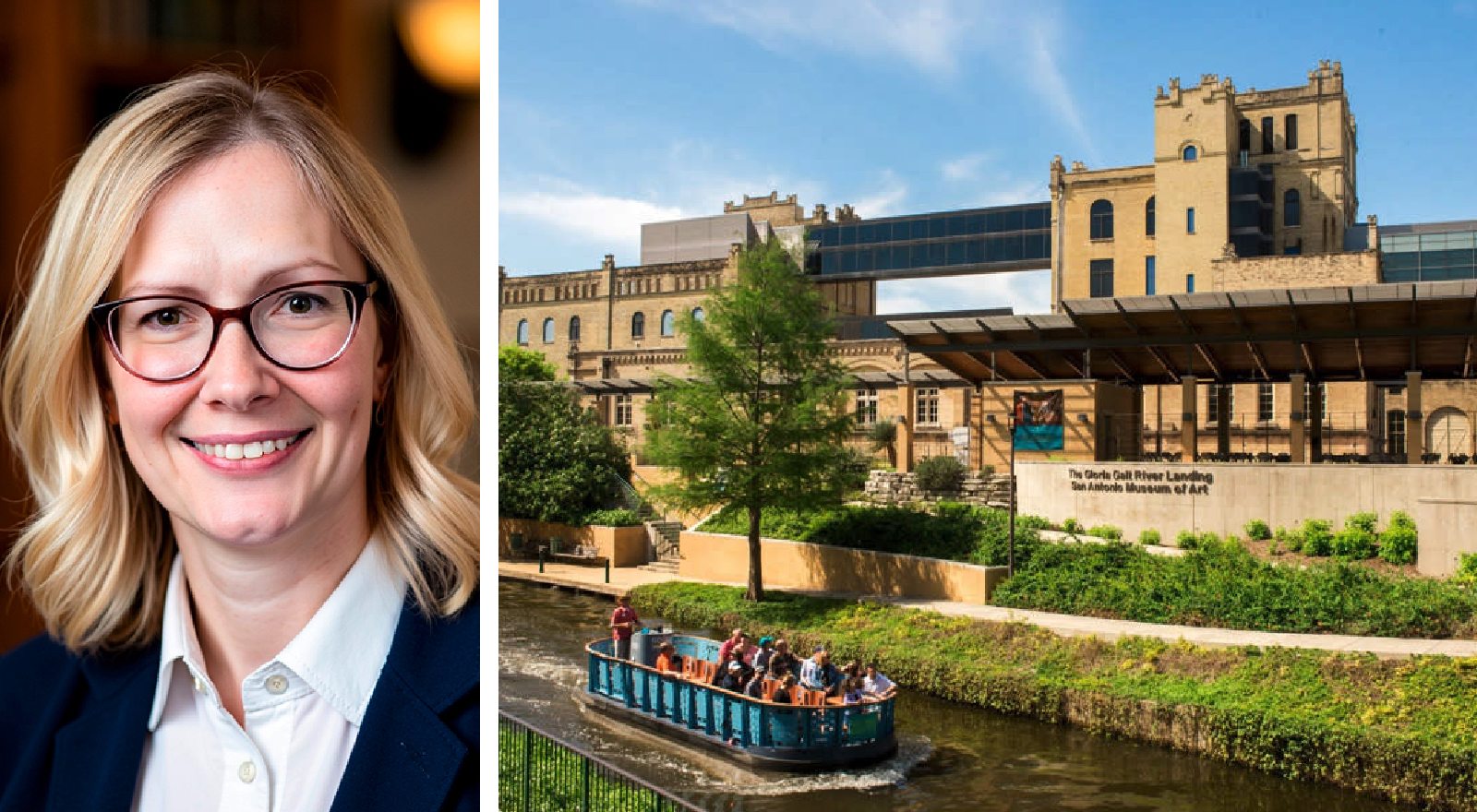
School of Art alumna Christine Crame Brindza has been named Curator of American Art at the San Antonio Museum of Art. She starts her new role on July 27.

Brindza received her PhD in Art History and Education from the University of Arizona in 2025.

She has worked the last 14 years at the Tucson Museum of Art and Historic Block as Senior Curator and Curator, where she’s been a pioneer in community-based curation with a specialty in art of the West and Indigenous art.

Her work has earned major national recognition, including the Arthur H. Wolf Impact Award (2024) and the American Alliance of Museums Impact Award (2025).

“Christine’s leadership has transformed how museums engage with artists, communities and the histories of American art,” said Emily B. Neff, The Kelso Director at At the San Antonio Museum of Art (SAMA), in an ArtDaily story.

At SAMA, Brindza will curate its American art collection, which spans the colonial period through the mid-twentieth century and includes portraits, landscape and still-life painting, prints and drawings, decorative arts, and marble and bronze sculpture. She also will oversee SAMA’s Texas collection and European collection, and work collaboratively with the Latin American art and contemporary art curators.

“I am honored to join the San Antonio Museum of Art and to contribute to an institution with such a dynamic commitment to cultural dialogue,” Brindza said.

🔗 Read the full ArtDaily story.

Patten, Alshaibi part of Arizona Biennial with 4 alums

The 2026 Arizona Biennial features six artists with University of Arizona School of Art ties, including MFA student Sheldon Patten and Professor Sama Alshaibi from the school’s acclaimed Photography, Video & Imaging program.

Joining them among the 31 artists chosen are School of Art alums Claire Fall Blanchette (MFA ’25), Eli Burke (PhD ’25), Mary Meyer (MFA ’05) and Anh-Thuy Nguyen (BFA ’10).

The 39th Biennial, the longest-running statewide juried exhibition in Arizona, is on view from May through September 2026 at the Tucson Museum of Art — juried by Julie Rodrigues Widholm, executive director of the Berkeley Art Museum and Pacific Film Archive at UC Berkeley.

“Serving as a juror for the Arizona Biennial was a genuinely exciting opportunity to take in the creative breadth across the state and deepen my sense of what’s happening in the Southwest,” Rodrigues Widholm said.

Meet the six SOA-related artists and their Biennial work (photos courtesy of the artists):

Sheldon Patten

“Clothesline Randolph, AZ”
“Cotton Fields Randolph, AZ”
“SRP Randolph, AZ”
All inkjet print on premium matte cotton paper, 2025

Slide Image
Slide Image
Slide Image
Sheldon Patten
Sheldon Patten
Prev Next

Artist statement: I create visual documentary work that examines identity, representation and structural inequality. Centered in Randolph, Arizona, this project investigates environmental racism and socioeconomic disinvestment affecting one of the state’s oldest historically Black communities. Established through Arizona’s cotton industry, Randolph was later annexed by the surrounding city of Coolidge and encircled by industrial development and hazardous infrastructure. The work considers how vulnerability and endurance coexist within systems of inequity, centering intimate human experience to reveal the beauty and continuity of collective resilience. I document how land, memory, and belonging endure despite displacement and political marginalization.

Bio: Patten is a lens-based artist from Toronto entering his second year of the MFA program at the School of Art. Using portraiture and visual documentary, he represents the impacts of displacement, environmental harm and resource scarcity imposed on historically Black and Caribbean communities. His earlier work — “Like a Rose”— examines the intimate bond between the artist and their mother as they navigate her living with Parkinson’s disease, tracing caregiving, loss of autonomy and the transformation of identity confronted by neurodegenerative illness.

Instagram and website: @sheldon_patten and sheldonpatten.com

Sama Alshaibi

“Tabula Rasa”
Mixed media collage, 2026

Slide Image
Sama Alshaibi
Sama Alshaibi
Prev Next

Artist statement: “My practice emerges from aftermath, where fragmentation is the material condition of political conflict and forced migration. I explore Iraq’s built environments and the systems that imagined them. Baghdad is not only a place, but a living archive shaped by developmental ambition and political interruption. Using fieldwork, archival materials, and on-site imaging, I trace how modernization was spatialized and then stalled, and how its residue remains legible in form. Through LiDAR scanning, photography and video, I render Baghdad as a palimpsest. Return—grounded in my position as both exiled and returnee—exposes the misalignment between memory, form, and experience.”

Bio: Born in Iraq to a Palestinian mother and Iraqi father, and now a naturalized US citizen, Alshaibi is a Regents Professor of Art and Chair of the Photography, Video and Imaging program at the School of Art. Her work has been widely exhibited, including at the 55th Venice Biennale, the 13th Cairo International Biennale, the Museum of Modern Art (New York), Crystal Bridges Museum of Art (State of the Art 2020), and the Barjeel Foundation (UAE). Aperture Foundation published her monograph, Sama Alshaibi: Sand Rushes In, in 2015. Alshaibi is the recipient of numerous awards and fellowships, including the Guggenheim Fellowship in Photography (2021), the Art Matters Betty Parsons Fellowship (2023), the Arab Fund for Arts and Culture Visual Arts Award (2017), and residencies at MacDowell (2025), the Rockefeller Foundation Bellagio Center (2024), and Artpace (2019).

Instagram and website: @sama_alshaibi and samaalshaibi.com

Claire Fall Blanchette

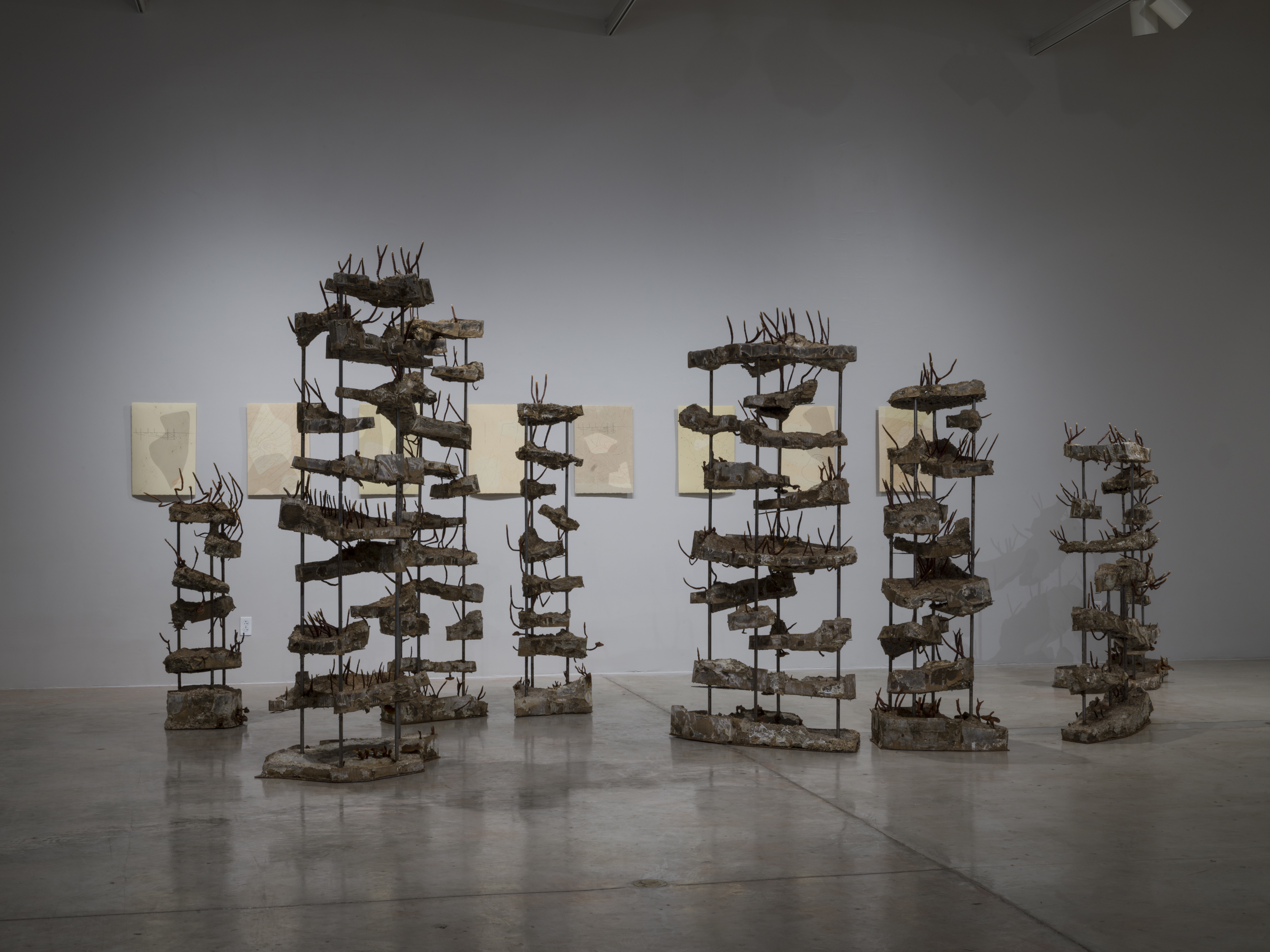
“Tangled Currents”
Reishi mycelium, hemp hurd, hardwood shavings, clay, cardboard, paper, xanthan gum, and steel (2025)
“Reclamare”
Screen print and reishi spores on Rives BFK (2025)

Slide Image
Slide Image
Claire Fall Blanchette
Prev Next

Artist statement: “Tangled Currents” uses eight historic landfills along the Santa Cruz River in Tucson as a framework to examine the sustained consequences of human activity on a local ecosystem. Each sculpture represents one of these sites and offers a speculative solution for their remediation. The work is created with reishi mycelium. Mycelial networks can clean toxins from soil and water through the process of myco-remediation and form reciprocal relationships with other organisms that increase their collective chance of survival. Tangled Currents presents an alternative to human-centered ways of thinking by examining natural processes for guidance in developing a mutually beneficial world.

Bio: Blanchette is an artist working across multiple disciplines including sculpture, printmaking and drawing. She holds an MFA in Studio Art from the University of Arizona in Tucson and a BFA in Printmaking and History of Art from Massachusetts College of Art and Design in Boston. Recently, she was an artist-in-residence in the Expressive Arts Department at Western New Mexico University in Silver City, New Mexico, where she had a solo show, “Ground Truthing,” at the Francis McCray Gallery. Using organic and unconventional materials, she investigates the boundaries that humans have established between the built world and the environment. Blanchette is the recipient of the Marcia Grand Centennial Sculpture Prize (University of Arizona), Helen Gross Award (University of Arizona), Reba Stewart – Genevieve McMillan Travel Fellowship (Massachusetts College of Art and Design). She also was an artist-in-residence at Djerassi Resident Artist Program (CA), The Land With No Name (AZ), and Konstepidemin Arts Center (Gothenburg, Sweden). She has shown nationally and internationally in solo and group exhibitions.

Instagram and website: @clr_fall and cfblanchette.com

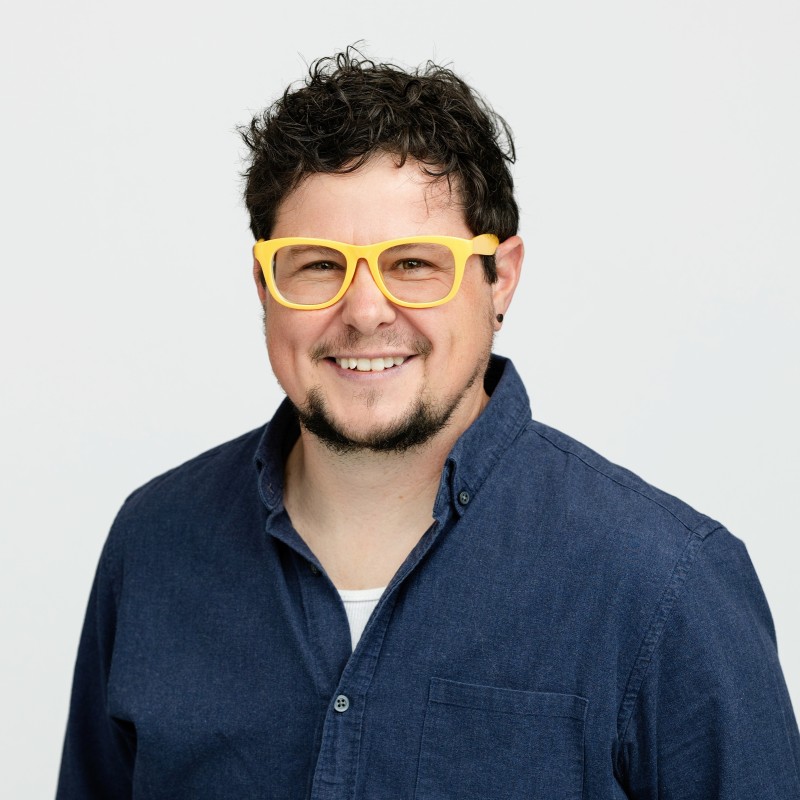
Eli Burke

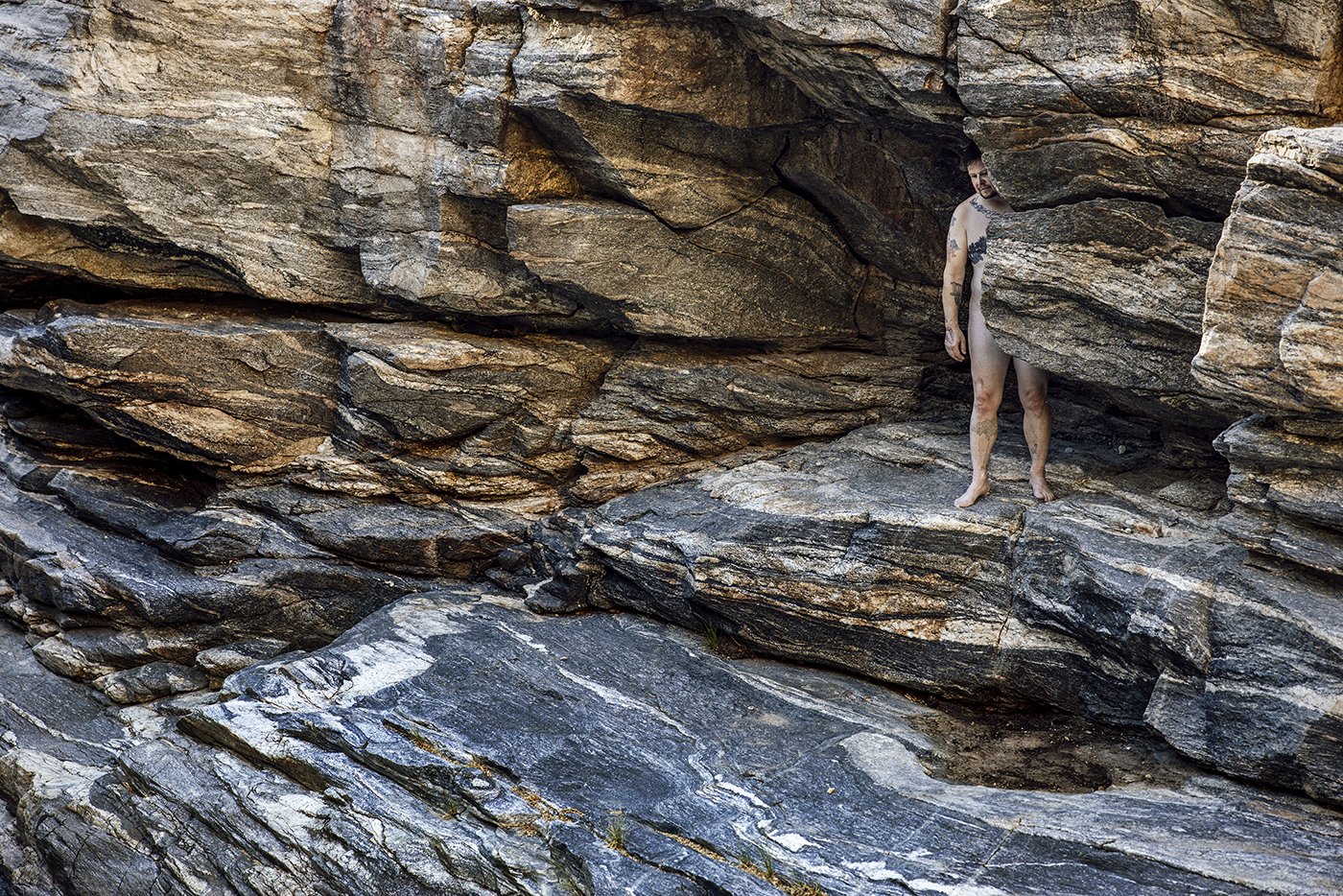
“The Opening”
Photograph printed on coroplast, 2024

Slide Image
Eli Burke
Eli Burke
Prev Next

Artist statement: Artists and cousins Eli and Jesse Burke weave a visual narrative that intertwines identity, nature, and transformation through collaborative photography. Their work-in-progress explores themes of trans identity, masculinity, and embodiment, while examining the interplay between the human experience and the natural world. The Burkes’ photographs reflect a profound connection between the shifting landscapes and the fluidity of the trans body. The ever-changing desert, with its resilient flora and vast skies, mirrors the process of transformation within the body, particularly the trans body, reflecting both its vulnerabilities and strength as it undergoes constant redefinition.

Bio: Burke is an interdisciplinary artist working across drawing, painting, printmaking, photography and installation, exploring themes of loss, identity, queer embodiment, magic, empathy, and vulnerability. Burke earned an MFA from the School of the Art Institute of Chicago and a PhD in Art and Visual Culture Education from the University of Arizona School of Art.

Instagram and website: @iheartfeelings and eliburke.com

Mary Meyer

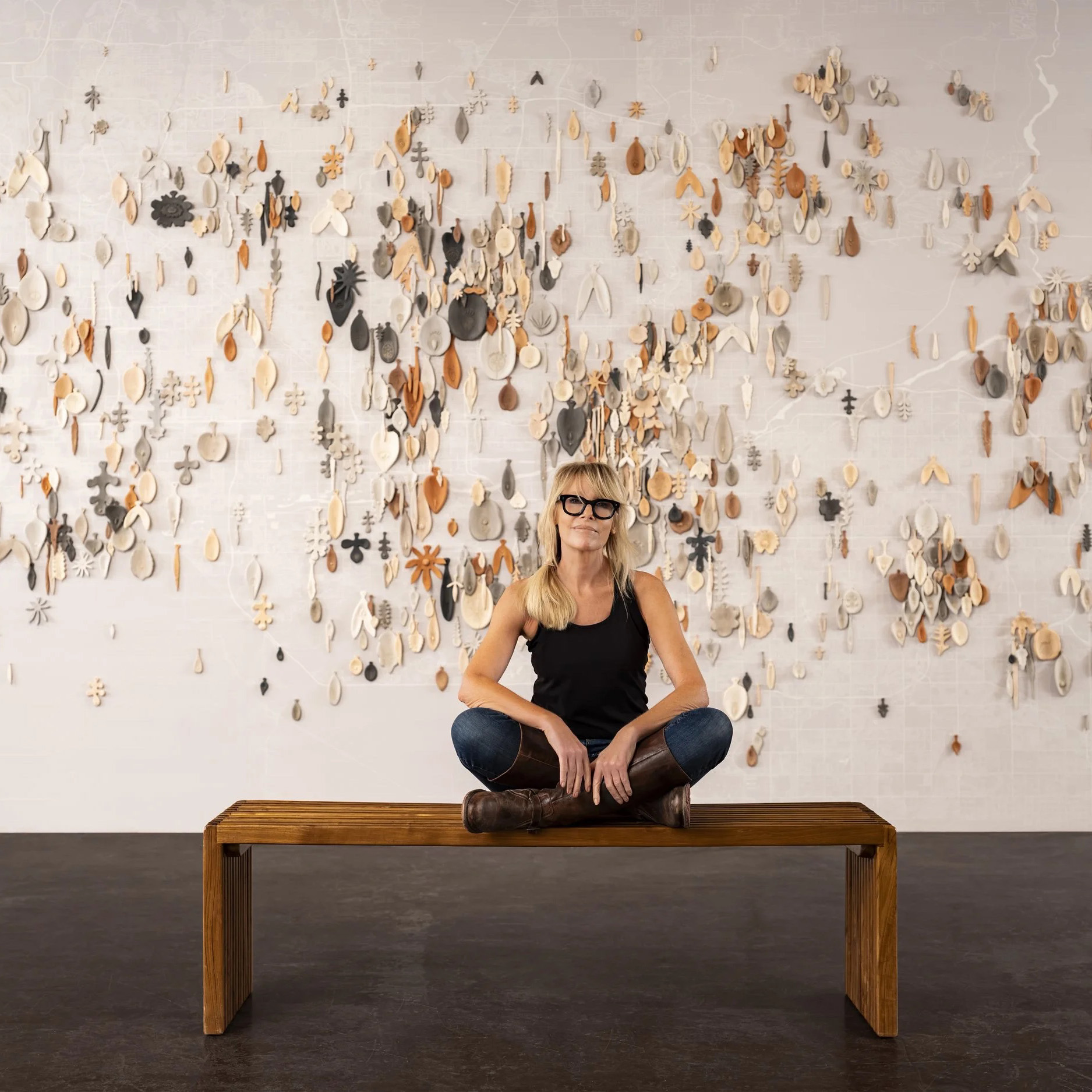
“The Leaf Connection”
Hand-carved ceramic leaves and pins, 2024-25

Slide Image
Mary Meyer
Mary Meyer
Prev Next

Artist statement: My sculptural practice examines the relationship between humans and the botanical world, grounded in Arizona’s ecology and shaped by biophilia—the innate human affinity for living systems. Working with clay, wood, and found objects, I focus on tactile experiences to explore cycles of growth, adaptation, and resilience shared by bodies and plants. “The Leaf Connection” extends this inquiry through hand-carved ceramic leaves inspired by community-sourced observations of local flora, highlighting citizen science and our shared responsibility for urban biodiversity. Through these works, I create contemplative spaces where material presence, embodied encounter, and desert environment intersect to deepen connection to place.

Bio: Meyer is a sculptor whose work investigates the relationship between the human form and the natural environment. Originally trained in stone carving, she is drawn to meditative processes and materials such as clay, wood, and metal that foster the intuitive exploration of form. Meyer grew up in the Midwest and has lived in Arizona for 30 years. She holds a BFA in sculpture from Arizona State University, where she studied foundry casting methods and metalworking. She completed her graduate studies at the University of Arizona, where she received the MFA Fellowship for her work with large mixed media installations. The artist, who has exhibited throughout Arizona and Royal Caribbean International, has served as an adjunct professor teaching sculpture at Arizona State University, Scottsdale Community College and Chandler-Gilbert Community College.

Instagram and website: @marymeyerstudio and marymeyerstudio.com

Anh-Thuy Nguyen

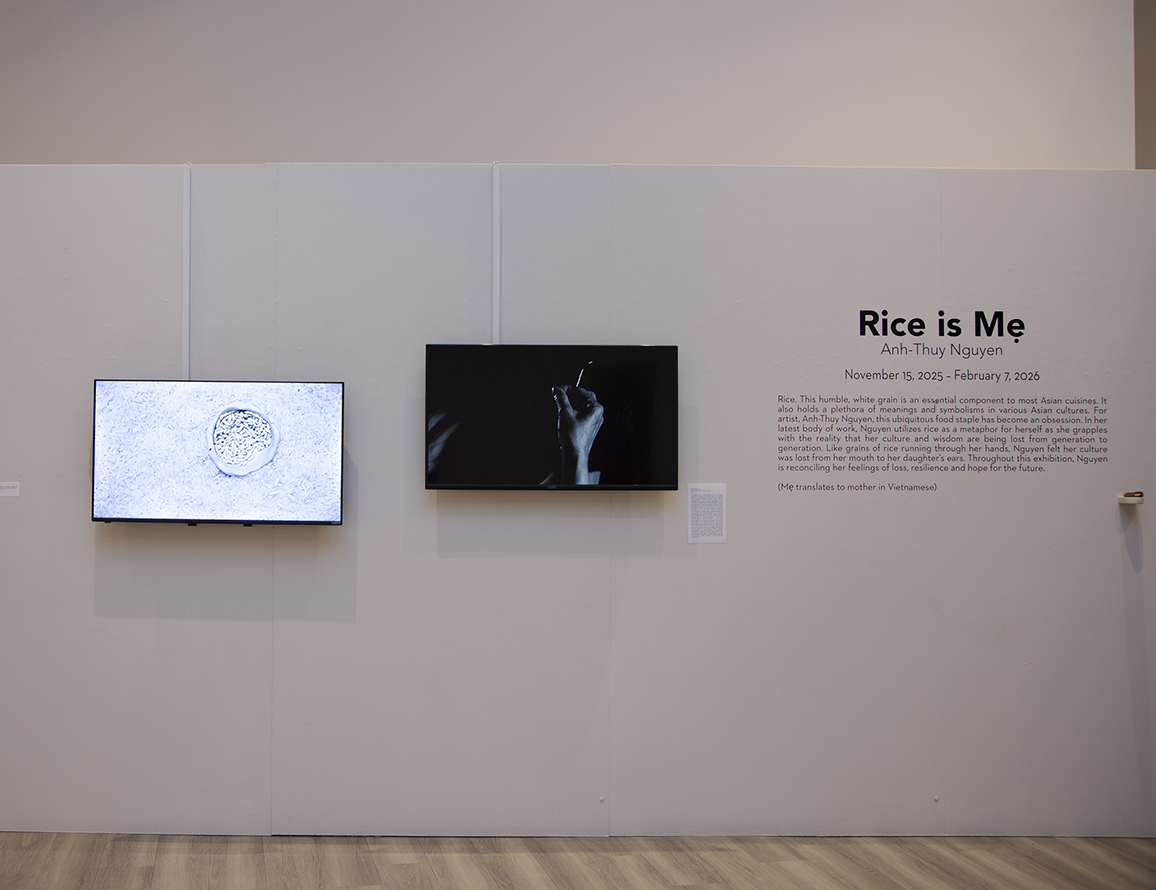
“Rice is Me”
2-separate-channel video with sound, 2025

Slide Image
Anh-Thuy Nguyen
Anh-Thuy Nguyen
Prev Next

Artist statement: The works I submitted here are drawn from the multi-disciplinary project “Rice is Mẹ” (Mẹ is Mother in Vietnamese). Through the powerful symbol of rice, I embark on a journey to reconnect with my roots, family, and traditions, while navigating the complexities of cultural assimilation. I blend my primary approaches (photography, video) with ceramics, sculpture and poetry in this new work to express my complex emotions of loss, hope and resilience. At the heart of the “Rice is Mẹ” project, I intended to reclaim rice as my artistic medium by combining Vietnamese and American clay to sculpt each grain of rice.  

Bio: Nguyen live and works in Tucson, where she is head of the Visual Arts Department at Pima Community College. She received her MFA in Photography/Video from Southern Methodist University, a BFA in Photography from the University of Arizona; and a BA in Economic Geography from the University of Social Sciences & Humanities in Ho Chi Minh City, Viet Nam. As a Vietnamese-American artist, she investigates her cultural and identity as well as her migration story through photography, video, installation and performance art. She has received grants and fellowships from the Arizona Commissions for the Arts, Art Foundations for Tucson and Southern Arizona, Oklahoma Visual Arts Coalition, and the Oklahoma Center for Humanities. Recently. She was awarded the 2023 Second Sight award from Medium Photo, and her work work is in the permanent collections of Amarillo Museum of Art, Tucson Museum of Art, the Center for Photography at Woodstock among others.

Instagram and website: @anh_thuynguyen and anh-thuynguyen.com

Other Biennial artists

  • Michael Afsa
  • Maria Ruth Aragon De la Fuente
  • Scott Baxter
  • Brass Tuna
  • Cherie Buck-Hutchison
  • Manny Burruel
  • Ashley Czajkowski
  • Hoge Day
  • Rafael Angel Diaz
  • Mikey Estes
  • Nathan Garcia
  • Lex Gjurasic
  • Maura Grogan
  • Kate Hoover
  • Adia Jamille

Related stories

Half Off Special

Half Off Special

Wilbur Dallas Fremont
Tailgate Party

Tailgate Party

Roger Masterson
What Do You See?

What Do You See?

Utvista Galiante
Floral Arrangement

Floral Arrangement

Janessa Southerland
I fell down some stairs

I fell down some stairs

Lyle Emmerson Jr.