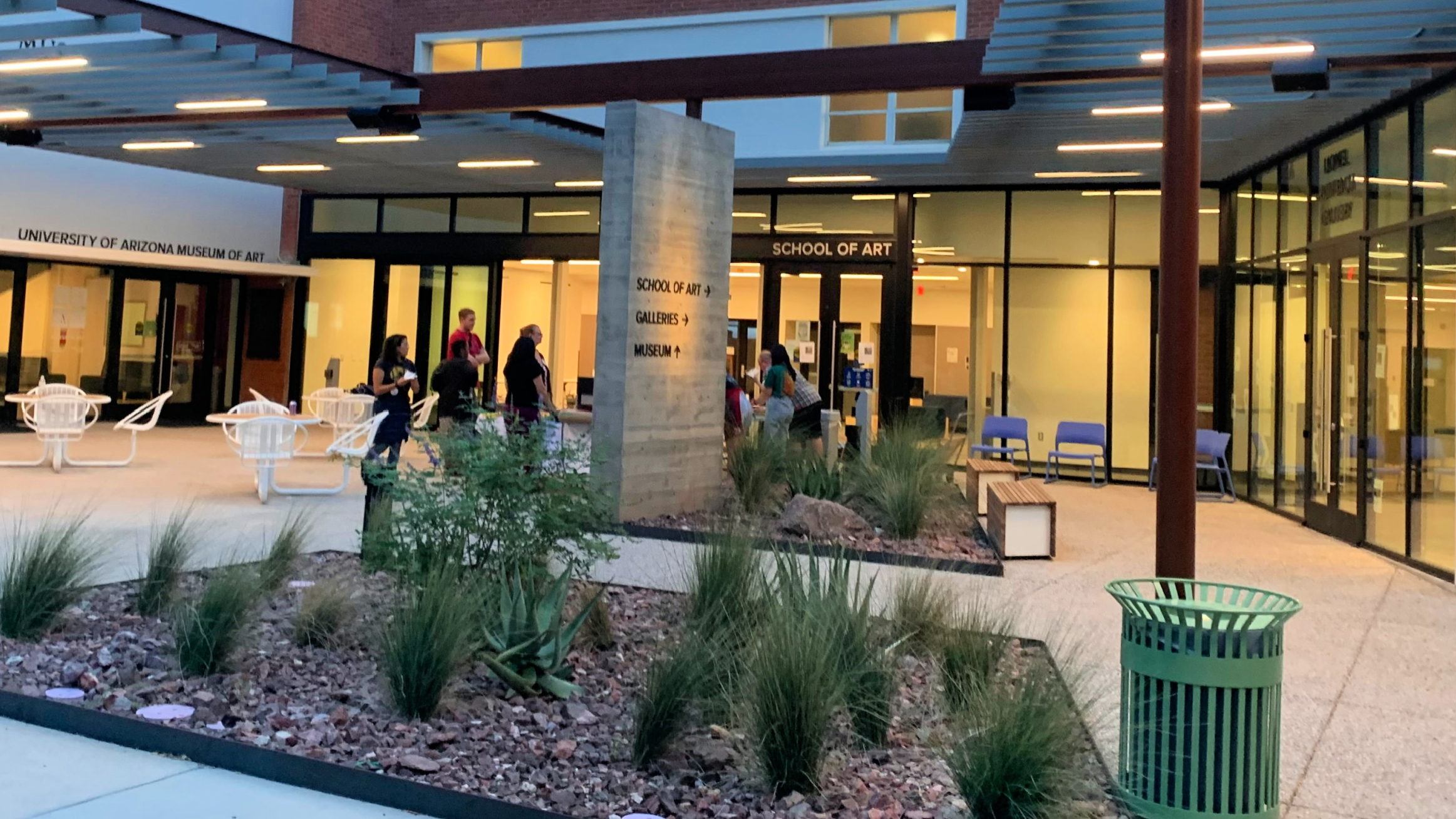
Seven join School of Art faculty, staff

As the 2026-27 school year begins, the University of Arizona School of Art welcomes director Jeff Beekman and six other new faculty and staff members:

  • Andrea Allen, Assistant Professor
  • Kerri Conlon, Assistant Professor
  • Isabella Shey Robbins, Assistant Professor
  • Pete Froslie, Professor
  • Nicole Dvorak, Academic Advisor
  • Andrew Schroeder, Technician

Here’s a look at the school’s new faces.

Jeff Beekman

Jeff Beekman

Position: Director, School of Art; Professor, Photography, Video & Imaging

Bio:  Beekman took over as director of the School of Art on July 1, bringing nationally recognized leadership as the school nears its centennial in 2027. He came to the U of A from Florida State University, where he chaired the Department of Art since 2023 and held other roles since 2013, including associate chair and director of Foundations and BA programs. As a community steward, he received an Emerging Arts Administrators Fellowship by the National Council of Arts Administrators. Previously, Beekman taught at the University of Oklahoma, Georgia Southern University and the University of New Mexico-Gallup. He received his BFA from the University of Florida and his MFA from the University of New Mexico. As an artist, he has focused his work “on our relationship with the landscapes we occupy,” including lens-based projects in recent years. He has exhibited broadly across the U.S. and internationally at venues in New Zealand, Australia, China, South Korea, Hungary, England, Ecuador, Italy and Vietnam. In his work, Beekman has explored human and environmental trauma, including the “Florida Coastline Project” and the “Battlefield Project,” which photographically explores conflict sites in the U.S. Civil War with archival photos of soldiers projected upon the battlefields where they fought and fell.

Quote: “I have a deep love for the American West. Joining a school the caliber of the University of Arizona and working with a faculty as dynamic and well-respected as those in the School of Art is truly exciting.”— Jeff Beekman

Website and Instagram: https://jeffbeekman.wixsite.com/home and @jeffbeekman

Andrea Allen
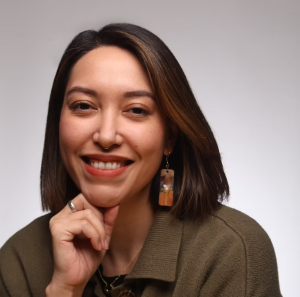
Andrea Allen

Position: Assistant Professor, Art & Visual Culture Education

Bio: Allen comes from Michigan State University, where she was an assistant professor of Art Education and the undergraduate program coordinator. She is an interdisciplinary artist-educator and scholar specializing in social justice art teaching, identity development, and decolonial methodologies in visual arts education and research. Her scholarship has been published in leading art education journals, including Studies in Art Education and the Journal of Cultural Research in Art Education. She has presented her work at numerous state and national conferences and serves as program chair for the Inquiry in Visual and Performing Arts Education Special Interest Group within the American Educational Research Association. Allen has over a decade of teaching experience spanning community arts centers, museums, and K-16 classrooms across Texas, New York, Japan and New Zealand. She earned her PhD in Curriculum and Instruction with a specialization in Art Education from the University of Houston in 2023, where she also completed her MEd and BA in Broadcast Journalism.

Quote: “In my teaching, research and artmaking, I draw from the concept of nepantla, a Nahuatl term meaning ‘the place in the middle,’ as articulated by poet-activist Gloria Anzaldúa. From nepantla, my identities as Mexican, Filipino, American, Woman, Artist, Scholar and Teacher interact to challenge my internalized beliefs about what it means to embody these roles.” — Andrea Allen

Website and Instagram: andreaeallen.com and @teetasdoodles

Kerri Conlon
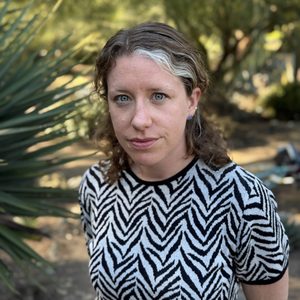
Kerri Conlon

Position: Assistant Professor, 3D & Extended Media

Bio: Conlon’s large-scale sculptural installations fuse the ornamental with the structural to explore the intersections of construction, both architectural and cultural, investigating how identity and space are shaped by structures that are at once physical and ideological. 

She received her MFA in Sculpture from the Yale School of Art in 2019 and her BFA in Sculpture from the Rhode Island School of Design in 2009. She has exhibited nationally, with recent solo exhibitions including Permission Structures at Cal Poly University Art Gallery, San Luis Obispo, CA and Upholding at Bass and Reiner in San Francisco, CA. Her work has also been shown in New York, NY; Providence, RI; and Ferguson, MO. She has received numerous fellowships and awards, including the Lighthouse Works Fellowship (2023) and the Fannie B. Pardee Prize for Excellence in Sculpture (2019).  

Conlon was previously a Lecturer in the Art and Art History Department at Stanford University. She is the co-founder of Hunt Projects, a shared studio space in San Francisco that provides artists with private studios and a communal wood and metal shop for material exploration and dialogue. She has worked in academic shop spaces since 2007, teaching students the conceptual and technical skills necessary to translate ideas into physical form.

Quote: I believe that making is a way of knowing and fosters agency in students through hands-on engagement with materials and processes.” — Kerri Conlon

Website and Instagram: kerriconlon.com and @kerriconlonstudio

Isabella Shey Robbins
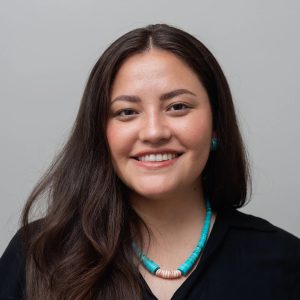
Isabella Shey Robbins

Position: Assistant Professor, Art History

Bio: Robbins is a Diné scholar, curator and educator from Cameron, Arizona, on the Navajo Nation. She received her PhD in the History of Art and American Studies departments at Yale University in May 2026. Her dissertation, “Relationality and Being: Indigeneity, Space and Transit in Global Contemporary Art,” considers how artists engage with their own communities and others within and across the settler states of the U.S. and Australia.Guiding her research are questions related to definitions of Indigeneity, and the intersections of mobility, diaspora, and global Indigeneity.

She recently completed the second and final year of her prestigious Chester Dale Fellowship in Washington, D.C., with the Center for Advanced Study in the Visual Arts — the National Gallery of Art’s world-renowned research institute. Robbins has held curatorial positions at the Yale University Art Gallery, the Haffenreffer Museum of Anthropology, and the Cantor Arts Center, and has taught contemporary art history and theory courses at the Institute of American Indian Arts. Robbins earned a BA in Art History from Stanford University and an MA in Public Humanities from Brown University. She serves as treasurer of the Diné Studies Association.

Quote: “(My) dissertation more broadly considers the meaningful engagements of specific places and their peoples, symbols of Indianness, and the repetition of cultural and aesthetic practices by artists.”

Instagram: @isabella.shey

Pete Froslie

Pete Froslie

Position: Professor, Photography, Video & Imaging; associate dean for research and graduate studies, College of Fine Arts

Bio: Froslie, whose research focuses on the intersection of human-made technological systems, art and culture, is also the new associate director of AI and the Arts within the University of Arizona’s Office of Responsible AI. He has long been fascinated with the relationship between global political and economic structures and emerging issues of climate and environmental change. He joins the U of A from the University of Oklahoma, where he was associate dean for technology and grants of the Weitzenhoffer Family College of Fine Arts, the Director of the School of Visual Arts, and Professor of Art, Technology and Culture.

He received his Master of Fine Arts from the Studio for Interrelated Media at the Massachusetts College of Art (MassArt) and his Bachelor of Fine Arts from the University of Nevada-Reno. As part of his art practice, Froslie’s recent work includes three expeditions to the Arctic Circle in the Svalbard archipelago in 2017, 2019, and 2024. 

Quote: “You can feel the energy around the arts at the University of Arizona. The Arizona Arts community engages urgent environmental and social questions, and there’s a genuine commitment to interdisciplinary work.” — Pete Froslie

Website and Instagram: froslie.net and @petefroslie

Nicole Dvorak

Nicole Dvorak

Position: Undergraduate academic advisor

Bio: Dvorak previously was an academic advisor at Pima Community College in Tucson and Columbia College in Denver. Before that, she taught World History and Reading in the Orange County Public Schools District in Apopka, Florida. She received her bachelor’s degree in Elementary Education and Teaching from the University of Central Florida. Nicole was born outside of Chicago, but moved to Orlando, Florida, when she was in the third grade.

Quote: “I consider teaching and academic advising to be closely related. There are many transferable skills of teaching that carry into the academic advising world, such as student mentoring and counseling in both academic and personal capacities, using data to drive practices, and helping students navigate their educational journeys. Both careers are rewarding as my main goal is helping students be successful and achieve their goals.”

Instagram: @nicole_dvorak

Andrew Schroeder

Andrew Schroeder

Position: Technician for Print, Publishing and Book Arts

Background: Schroeder grew up in Nebraska and received his BFA in Printmaking from the University of Nebraska, before getting his MFA in Printmaking and Photography from the University of Minnesota. Initially torn between art, geography and sociology, he studied printmaking at Nebraska under Karen Kunc, “who showed me that visual art could be the umbrella under which I could explore all three,” he said. For the last three years, he was the College of Fine Arts photography lab manager at the University of New Mexico. Among his previous roles, he was a program coordinator at the University of Arizona Faculty Center and at the Minneapolis College of Art and Design.

Quote: “I’m thrilled to join the School of Art because this role lets me combine my passion for technical practice with my love of typography and printmaking. I want to dive into the extensive and incredibly diverse collection of wooden and metal type in the letterpress area, ensuring students and faculty can fully leverage it while also researching the typographic history of these objects. I’m also eager to expand our workflows using the Risograph, especially developing methods for reproducing photographs via halftones on the machine … something I’m excited to learn and share with the community. … My approach to this role is about facilitating art-making and helping students produce their best work.”

Website and Instagram: andrewschroeder.net and @eigengrau_photo
VASE series marks 20th season with 4 artists, scholars

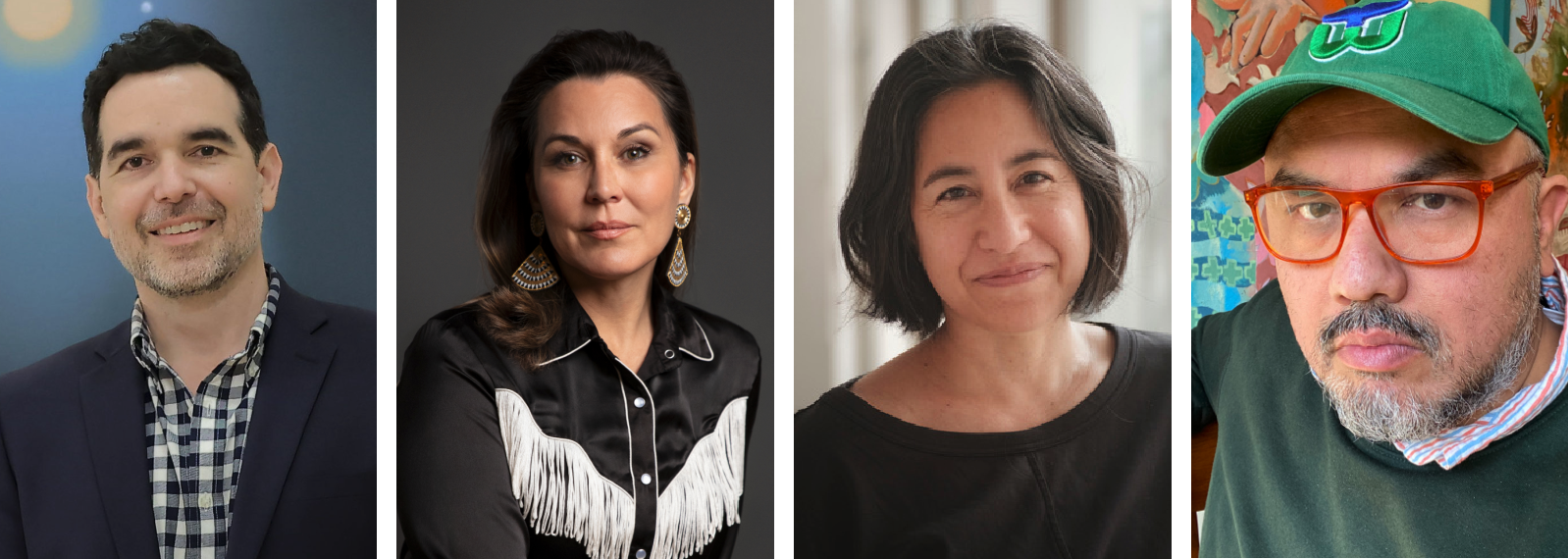
Celebrating its 20th season, the University of Arizona School of Art’s Visiting Artists and Scholars Endowment (VASE) lecture series will feature Dario Robleto, Cara Romero, Ana María León and Jorge Lucero in 2026-27.

The free, hour-long VASE presentations will be held at the Center for Creative Photography auditorium, 1030 N. Olive Road.

“VASE creates a space of encounter where artists, architects and scholars meet our students in the fertile ground between disciplines,” Regents Professor Sama Alshaibi said.

Dario Robleto

Dario Robleto
  • Date: Thursday, Oct. 29, 2026, 5:30 p.m.
  • Lecture title: “Ancient Beacons Long for Notice”

Robleto will discuss his interdisciplinary approach to crafting and conveying messages of emotion and identity into the cosmos, a kind of “humanities off-planet.” He is an American artist, writer and filmmaker based in Houston. His work has been exhibited widely and held in prominent collections, including the Whitney Museum of American Art, the Menil Collection and the National Gallery of Art. “Ancient Beacons Long for Notice” also is a film by Robleto — the third installment in a trilogy exploring the history and legacy of the Golden Record, a cosmic time capsule attached to NASA’s Voyager I and II space probes.

Cara Romero

Cara Romero
  • Date: Wednesday, Dec. 2, 2026, 5:30 p.m.
  • Lecture title: “Photography as Praxis”

Renowned artist/photographer Cara Romero will give a career-spanning talk about the making of a contemporary Native artist, from her training at the Institute of American Indian Arts to founding the Cara Romero Gallery and Studio in Santa Fe, New Mexico. An enrolled citizen of the Chemehuevi Indian Tribe, Romero’s work — held in the permanent collections of The Metropolitan Museum of Art and MoMA — moves fluidly between fine art, documentary and cinematic staged photography, grounded in Chemehuevi epistemology, traditional ecological knowledge, and Indigenous futurism.

Ana María León

Ana María León
  • Date: Thursday, Feb. 25, 2027, 5:30 p.m.
  • Lecture title: “Spatial Solidarities at Dawson Island, 1889 & 1973”

León is an associate professor of Architecture at the Harvard Graduate School of Design. Her newest book is titled “Spatial Solidarities: Architecture and Resistance in 1970s.” She will talk about Chile’s Dawson Island, the site of a detention and torture center for political prisoners of the Pinochet dictatorship, which violently took over the country in 1973. León will examine the similarities between the settler colonial Chilean state at the end of the 19th century and the dictatorship of the late 20th century, as well as spatial forms of solidarity mobilized by the individuals imprisoned by the regime to resist its violence and reclaim their agency. Her talk is co-sponsored by the College of Architecture, Planning & Landscape Architecture.

Jorge Lucero

Jorge Lucero
  • Date: Thursday, March 25, 2027, 5:30 p.m.
  • Lecture title: “No Wasted Moves: On the Pliability of Teaching as a Creative Practice”

The Chicago artist and professor will expand on the pliability of a fully integrated teaching and creative practice. Showcasing major projects from the last 25 years, Lucero aims to present the possibility that conceptual art permissions open a path for rethinking how we test the expressive and inquiry potential of everyday institutions and materials we come in contact with. Lucero is a professor of Art Education in the School of Art & Design and a senior associate dean at the University of Illinois, Urbana-Champaign. Prior to working in higher education, he served as a high school art teacher at the Chicago Public School District.

About VASE

The School of Art focuses on bringing diverse artists and scholars from around the world to our campus. These artists and scholars bring their own unique influences to the program by engaging with community members, students, and faculty through salons, lectures and exhibitions.

The VASE series is made possible by the School of Art Advisory Board Visiting Artists and Scholars Endowment, the National Endowment for the Arts, the School of Art, the College of Fine Arts Dean’s Fund for Excellence, the Center for Creative Photography and the Museum of Contemporary Art (MOCA) Tucson.

Go to vase.art.arizona.edu for more details about the artists and scholars.

Foster Gluck earns Fulbright Scholar award in Spain

Dr. Geneva Foster Gluck, a School of Art adjunct instructor and alumna, has received a prestigious Fulbright U.S. Scholar Award along with six other University of Arizona faculty members for the 2026-27 academic year.

Foster Gluck will be based in Spain’s Catalonia region from September to May to develop a creative research project that combines energy humanities with applied art, theater and scenography as tools for promoting behavioral change related to climate change.

As part of the Fulbright Postdoctoral Research Award, she’ll work with environmental scientist Maria Heras at the Universitat Oberta de Catalunya in Barcelona on a series of immersive art and educational encounters that coalesce research questions and findings unique to Spain’s progressive energy, as well as the entangled legacies of colonialism, energy systems and cultural transformation.

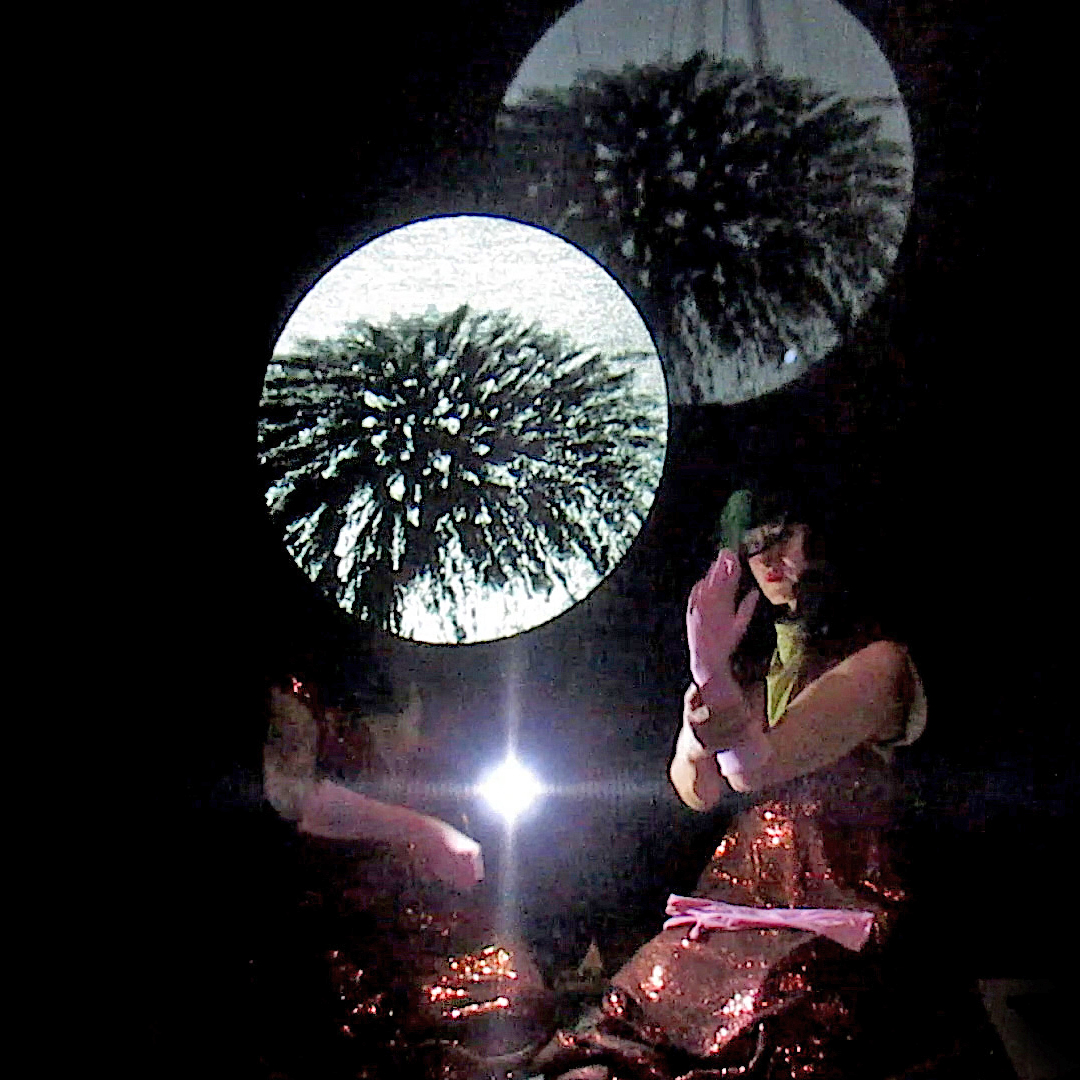
Dr. Geneva Foster Gluck in “Magnetic Chamber” (2022)

“This was my first (Fulbright) application … and I really look forward to working with Maria and with all the great energy and sustainability projects that are taking place in Spain,” Foster Gluck said. “By taking an interdisciplinary approach to energy humanities, theater and design, my research contributes insights into our daily interactions with energy, diversifies perceptions of energy and devises actions for generative possibilities on a warming planet in the form of public-facing, immersive and interactive experiences.”

She has explored similar environmental themes specific to Tucson and the borderlands in projects such as her site-specific performance “Inheriting the Void” (2026), at the base of Tumamoc Hill, and “Interactive Batteries” (2024) in the “Won’t You Be My Neighbor?” exhibition at the school’s Joseph Gross Gallery.

U of A has long Fulbright history

The Fulbright Program is the U.S. State Department’s flagship cultural exchange program that supports U.S. scholars conducting research or teaching abroad for up to a year. Since 1954, more than 300 Fulbright Scholars have represented the University of Arizona at institutions around the world, including seven in 2026-27 and seven in 2025-26, when U of A was named a top Fulbright producer and tied for fourth in the nation.

Since 2024, Foster Gluck has taught “Career Development for Artists” at the School of Art, where she received her BFA in 1999.

“I really enjoy teaching … and find it very satisfying to think about how to have sustainable arts practices, while expanding creative culture, such as art-as-research and community engagement,” she said. “Each semester is very different as each cohort of students brings new questions and perspectives on making a living as an artist.”

During her time in Spain, Foster Gluck will continue to teach her career development class online.

“I look forward to sharing some of what I learn about how Spain supports artists, its creative culture and economies,” she said. “The online format will also give me more time to work one-on-one with students and to support their unique visions and aims.”

Immersive theater, circus skills part of BFA years

During her undergraduate time at U of A, Gluck became a core member of Tucson-based Flam Chen Pyrotechnic Theatre, where she was responsible for introducing aerial circus skills and interactive sculpture into the company’s performance repertoire. Flam Chen performed at New York City and Philadelphia Fringe Festivals in 2001 and 2002.

After Gluck earned her M.A. in Scenography at the University of London in 2003, she went on to work with some of the UK’s most successful contemporary and immersive theater companies, including Fevered Sleep (2003), Marisa Carnesky (2004), and SHUNT (2005), before establishing her own company, Sugar Beast Circus, in 2007. The circus received professional acclaim, including the Jeunes Talents Cirque Award (2008), a residency at The Roadhouse (2010), a Circus Futures award (2011) and a premiere at the prestigious London International Mime Festival (2012).

“Inheriting the Void” (2026)
“Magnetic Chamber” (2022)
“Interactive Batteries” (2024)
“Battery Maker Museum” (2020)
Prev Next

“My work centers on immersive event-production, creative research, and material storytelling to explore a range of topics and experiences often grounded in decolonizing, feminist, and ecological approaches,” Gluck said. “I use a range of creative practices including performance, prop-making, video and sound installation to explore the connections between ways of knowing, environment and embodied experience.”

In 2020, Gluck completed a practice-led PhD program at Arizona State University titled, “Performing the Electrical or My Heart is an Electromagnetic Chamber: Scenographies of Power, Ecology and Speculative Practice.” Her research integrated performance studies, spatial theory and energy humanities to consider the ways that new knowledge is created and shared through artist led projects.

Now based in Tucson, Gluck is co-founder of Snakebite Creation Space, a platform for supporting performance, installation and process-based work in Southern Arizona and Northern Mexico. Her other shows included “Magnetic Chamber” (2022) at Pidgin Palace Arts, and “Battery Maker Museum” (2020), a month-long installation and nomadic storytelling project at the MSA Annex in west downtown.

Tumamoc project involves community

In early April, Gluck presented “Inheriting the Void,” a performance-installation and video essay, at the base of Tumamoc Hill. Loosely based on Gluck’s experience caring for her mother during her rapid onset of dementia, as well as larger themes of the climate crisis and mental health, the performance invited community members to scan a QR code on their phones for a 15-minute audiovisual story, using headphones.

She invited visitors to witness a speculative interaction between a bear and a ventriloquist that asks: “On whose behalf do we speak? What is the relationship between memory and knowledge? And who or what speaks through our actions?”

“I thought it was going to be much more of a traditional performance, but I was really pleased with the way the ‘narrative’ divided across the live installation, the site and the video essays,” she said. “I have used phone technologies before for site-specific and nomadic storytelling, but this was a little different, and the ways that the audience engaged with the work was really fun to see.”

The event was made possible by a MOCA Tucson Night Bloom Award and The Andy Warhol Foundation for the Visual Arts.

Internal support is available for prospective Fulbright Scholar and Specialist applicants. For more information, contact Danielle Barefoot, dbarefoot@arizona.edu, associate for International Research Development and the university’s Fulbright Scholar liaison.

Jeff Beekman takes reins at School of Art

Jeff Beekman is the new director of the University of Arizona School of Art, bringing nationally recognized leadership, “energy” and a “collaborative spirit” to the school as it nears its centennial.

Coming from Florida State University, Beekman chaired the Department of Art in Tallahassee since 2023 and held other leadership roles since 2013, including associate chair and director of Foundations and BA programs. Previously, he taught at the University of Oklahoma, Georgia Southern University and the University of New Mexico-Gallup. 

Jeff Beekman

“I am truly delighted to welcome Jeff to the University of Arizona School of Art. Jeff leads with care, curiosity, and a deep respect for artists and educators, and I know he will be a wonderful steward of this community,” said Hasan Elahi, dean of the College of Fine Arts and Arizona Arts.

“His energy, generosity and collaborative spirit make this an exciting moment for the School of Art,” said Elahi, who named Beekman as the next director on March 24, effective July 1.

Awards and accolades

As a community steward, Beekman received an Emerging Arts Administrators Fellowship by the National Council of Arts Administrators in 2023, in addition to being named a Leadership Award finalist at FSU for “those who have made a significant impact on the Tallahassee community.”

He received his BFA from the University of Florida in 2000 and his MFA from the University of New Mexico in 2005.

As an artist, Beekman has focused his work “on our relationship with the landscapes we occupy,” including lens-based projects in recent years.

He has exhibited broadly across the U.S. and internationally at venues in New Zealand, Australia, China, South Korea, Hungary, England, Ecuador, Italy and Vietnam.

“While I am proud of my time at FSU and all that we have accomplished together, I have a deep love for the American West,” Beekman said. “Joining a school the caliber of the University of Arizona and working with a faculty as dynamic and well-respected as those in the School of Art is truly exciting.”

School founded in 1927

Founded in 1927, the University of Arizona School of Art offers nationally ranked programs — including in Photography, Video and Imaging (PVI), rated No. 3 by U.S. News & World Report.

Undergraduate and graduate degrees include Art History; Art and Visual Culture Education; Design Arts and Practices; and Studio Art in 2D Studies; 3D & Extended Media; Illustration, Design and Animation; and PVI.

As director, Beekman is overseeing 30 full-time faculty and 14 adjunct faculty — including those who have earned Fulbright and Guggenheim fellowships, exhibited at major biennales and published field-defining research — in addition to an acclaimed alumni base that shapes creative industries around the world.

“I look forward to building on my experience as an artist and administrator to connect people, ideas and resources,” Beekman said, “and to work collaboratively with students and others across the school, college, university and community to expand the future horizons of an already thriving School of Art.”

He succeeds Karen Zimmermann, interim director, and Colin Blakely, who left as director after 10 years to become associate provost at the Rhode Island School of Design in July 2025.

“I want to extend my heartfelt thanks to Karen for her thoughtful and steady leadership as interim director, and to the search committee for the time, care, and commitment they brought to this process,” Elahi said. “Their collective work has positioned the School of Art exceptionally well for its next chapter.”

Image from Jeff Beekman’s “Battlefield Project.”

How Beekman helped FSU

As chair at FSU, Beekman worked to add additional faculty lines and over $1 million in facility repairs and upgrades.

He worked with donors to fundraise over $1.2 million for Studio Arts, doubling its previous endowment, to support a named professorship, increase student scholarships and awards, expand outreach to magnet high schools and state two-year colleges, and assist experiential learning opportunities and student travel.

In addition, Beekman expanded support for co-taught courses and collaborations between disciplines within Studio Art, as well between Studio Art and Art Education, Art Therapy, Dance, Design, Music, Physics, and FSU’s Innovation Hub.

A list of recent external collaborators include CERN, the Florida Department of Community Corrections, and the Jacksonville Zoo, where FSU students designed interactive enrichment toys for animals.

“Overcoming institutional silos can be difficult, but when done well it opens innumerable opportunities for our students and faculty and facilitates a culture of collaboration, creativity and inclusion within the department and beyond,” he said.

Art explores our relationships with landscapes

In his personal artwork, Beekman explores human and environmental trauma, including the “Florida Coastline Project” and the “Battlefield Project,” which photographically explores conflict sites in the U.S. Civil War with archival photos of soldiers projected upon the battlefields where they fought and fell.

Current exhibitions those at the Centro Cultural Benjamin Carrión (Quito, Ecuador) and Middlebury College (Vermont), where he is exhibiting alongside colleagues in the Eco.Echo Art Collective.

Also, Beekman has a curatorial practice, which he began while coordinating the University of New Mexico-Gallup Ingham Chapman Gallery. He counts his most notable exhibition as 2017’s “Broken Ground: New Directions in Land Art” at the FSU Museum of Fine Arts.

“Whether exploring the enduring impacts of climate changes on local communities, the Land Arts movement as a catalyst for contemporary art making, or the ethics behind the memorialization of sites of violence, the work I make consistently examines the relationships between land, memory and human activity,” he said.

Tailgate Party

Tailgate Party

Roger Masterson
Half Off Special

Half Off Special

Wilbur Dallas Fremont
I fell down some stairs

I fell down some stairs

Lyle Emmerson Jr.
Floral Arrangement

Floral Arrangement

Janessa Southerland
What Do You See?

What Do You See?

Utvista Galiante