The University of Arizona School of Art will have a strong presence this fall at the Museo de Arte de Sonora (MUSAS) in Hermosillo, Mexico, where three interconnected exhibitions will examine the social, political, environmental and cultural landscapes that shape the U.S.-Mexico borderlands.
School of Art Professor David Taylor’s “COMPLEX” will be accompanied by MFA alumna Mariel Miranda’s “El viento o el polvo, tal vez” (“The wind or the dust, perhaps”) and the group exhibition “Border as Network,” featuring work by nine graduate students who participated in Taylor’s fall 2024 field-study class.
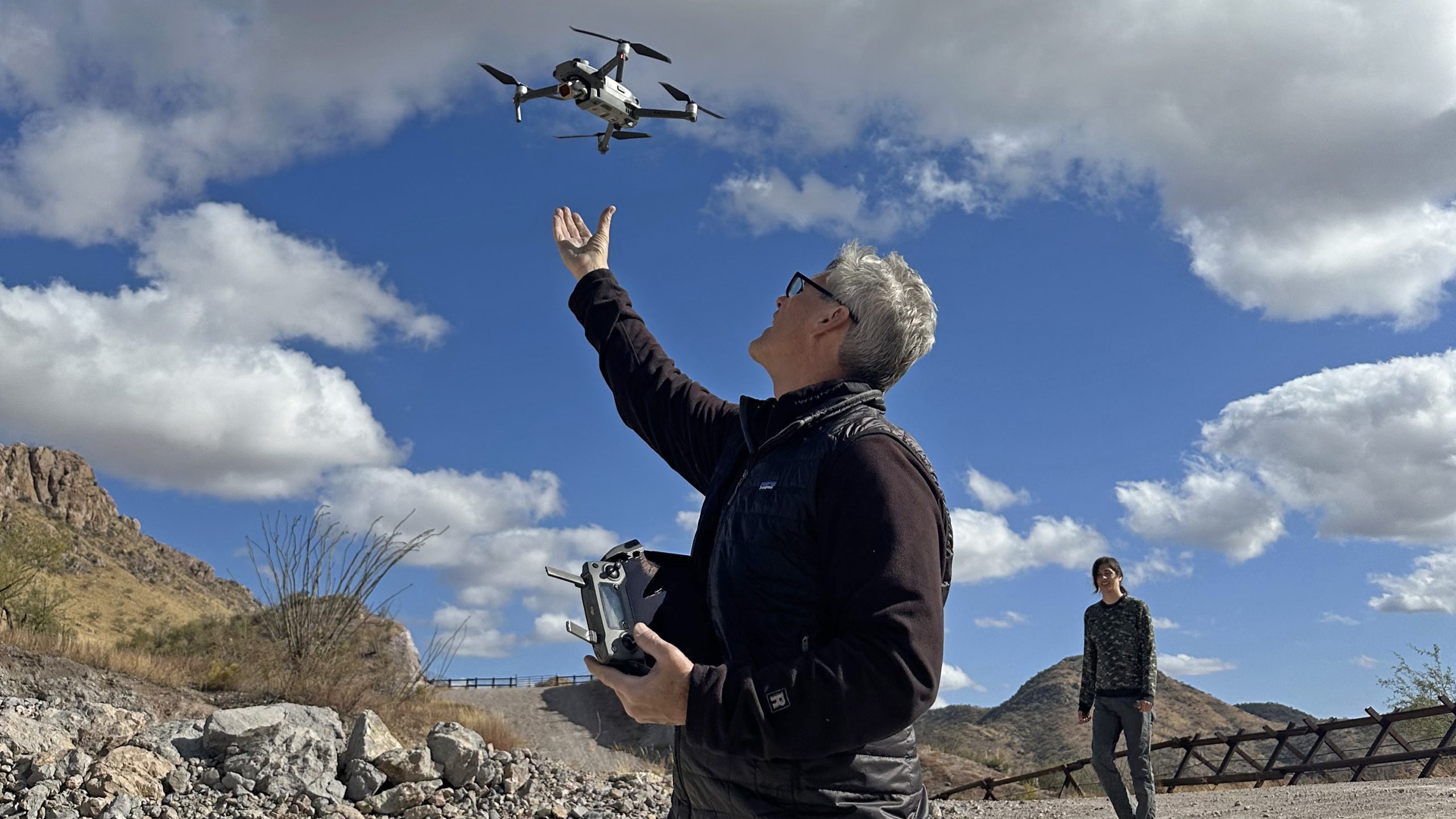
Sponsors of the Hermosillo exhibitions at the Museo de Arte de Sonora (MUSAS) include the University of Arizona’s Confluencenter for Creative Inquiry. Top photo: Professor Daylor Taylor flies a drone during his fall 2024 field-study class. (Photo by Lu Zheng)
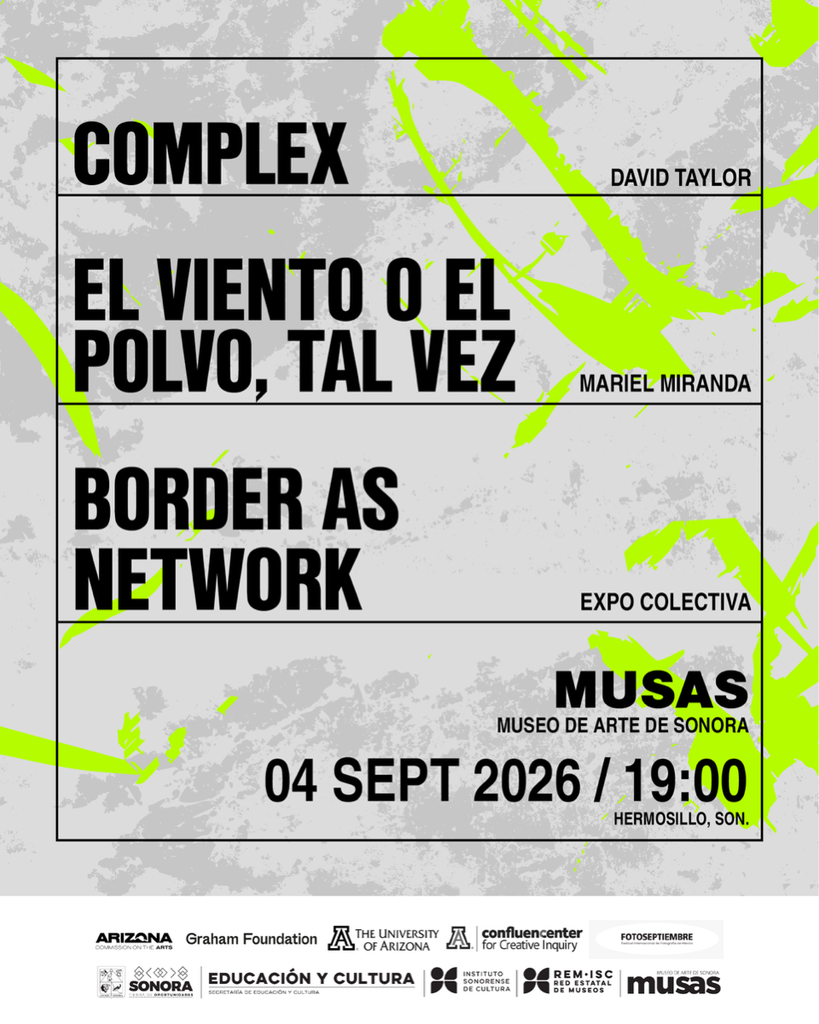
With a collective opening reception on Sept. 4 at 7 p.m., the three shows will stay on view at MUSAS as part of FotoSeptiembre Sonora 2026 and through March 28, 2027, occupying the museum’s third-floor galleries.
Taylor’s “COMPLEX” — supported by a prestigious Graham Foundation grant — includes photography, video, audio, aerial imagery and installation as part of his ongoing investigation into border infrastructure, surveillance technologies and detention centers that have changed the region over the past two decades. Also featured is his multimedia installation “Panorama/Panopticon,” which focuses on Ambos Nogales and the increasingly monitored Sonoran Desert border region.
“(The professor’s work) reveals the ways in which the logics of surveillance, containment and detention shape one another,” said curatorial contributor Ila N. Sharen, and simultaneously exposes the visible and invisible infrastructures that influence movement, perception and power.
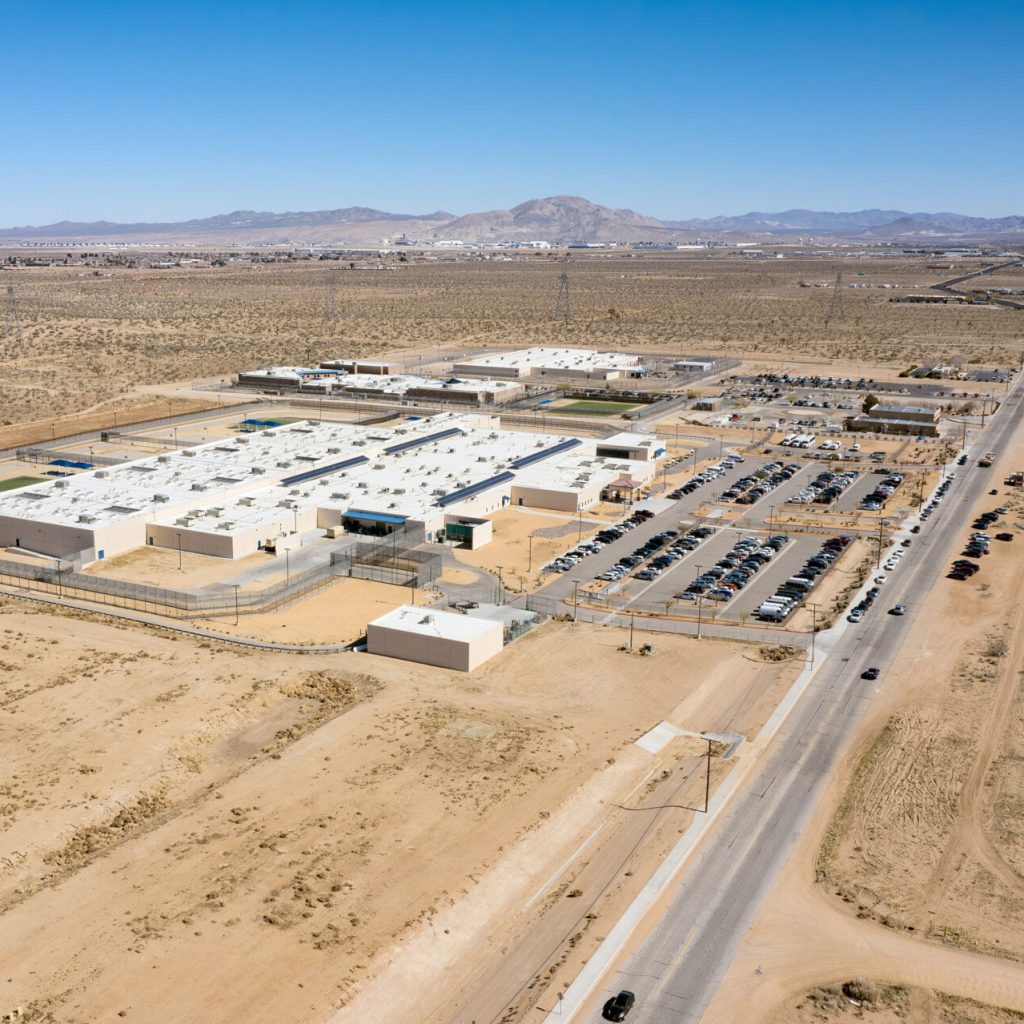
Professor David Taylor’s “COMPLEX” includes photographs of the vast system of privately operated prisons that incarcerate thousands of migrants and refugees under contract with Immigration and Customs Enforcement (ICE).
Miranda received her MFA in Studio Art in 2023. Her exhibition examines industrial ecosystems, labor and extractive economies through the experiences of people living and working in Tijuana’s Barrio Cumbres. Through installation, sculpture, video and speculative forms of inquiry, “El viento o el polvo, tal vez” highlights alternative futures emerging from the border region.
“(Her exhibition explores) alternative rhythms and subversive operations in which the working-class imagines, constructs and enables new horizons for the future,” curator Inari Reséndiz says.
Miranda’s similar 2023 MFA Thesis Exhibition installation, “The dust, or the wind, perhaps,” presented a speculative fiction installation invoking radical utopias founded in a Science Fiction workshop that she co-hosted with her brother, neighbors and friends in her Tijuana, Mexico, barrio.
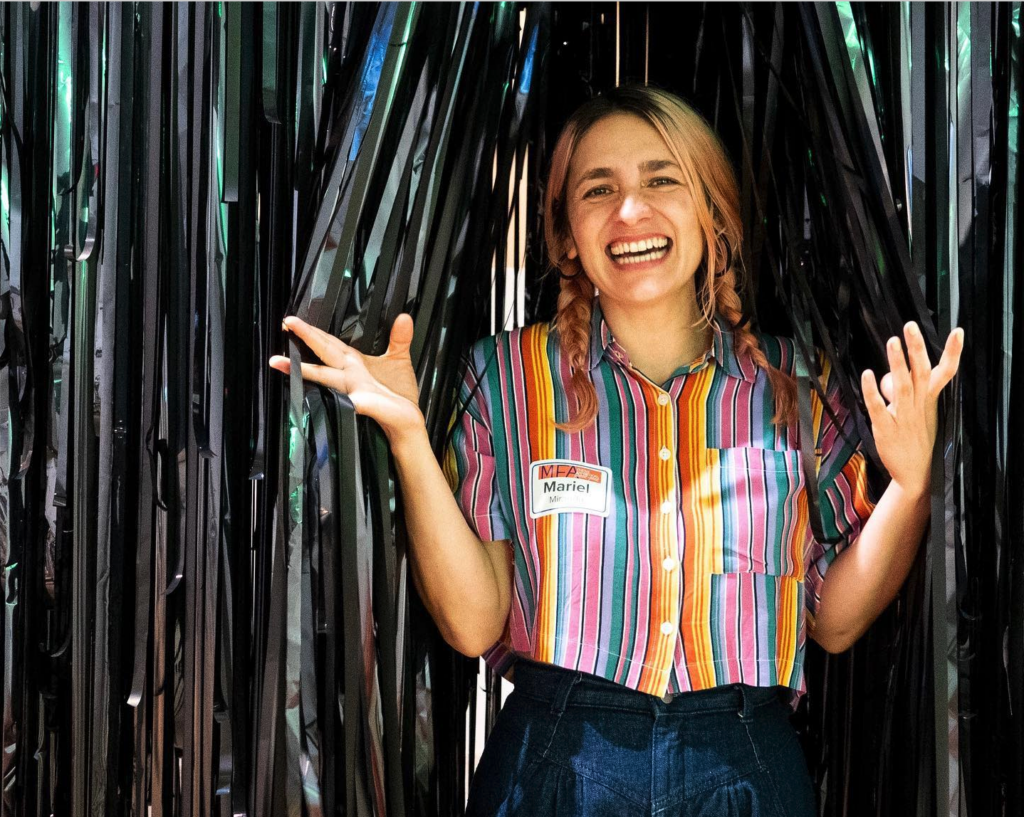
Mariel Miranda (MFA ’23, Studio Art), with her 2023 MFA Thesis Exhibition installation.
The third exhibition, “Border as Network,” features current School of Art MFA students Beihua Guo and Porter McDonald and Humanities graduate student Lu Zheng, as well as recent MFA graduates Andrés Caballero, Benjamin Davis, Maya Jackson, Alexis Joy Hagestad, Semoria F. Mosley and Camille Trautman. The nine traveled throughout Arizona and Sonora during the fall 2024 semester.
Their research took them to religious sites, Indigenous lands, manufacturing facilities, farms, threatened ecosystems, agricultural enterprises and resource-extraction zones. They followed the Tucson-Nogales-Hermosillo corridor, viewing it as a regional network whose local conditions illuminate broader global dynamics and affect everyday life.
“The resulting works challenge simplified narratives of the border and instead reveal a landscape defined by continuity, complexity and interdependence” the museum said in a news release.
The students’ work also reflects Gloria Anzaldúa’s view of the borderlands as a place that is geographic, psychological and spiritual. Anzaldúa, who died in 2004, was an American philosopher and scholar of Chicana feminism, cultural theory and queer theory.
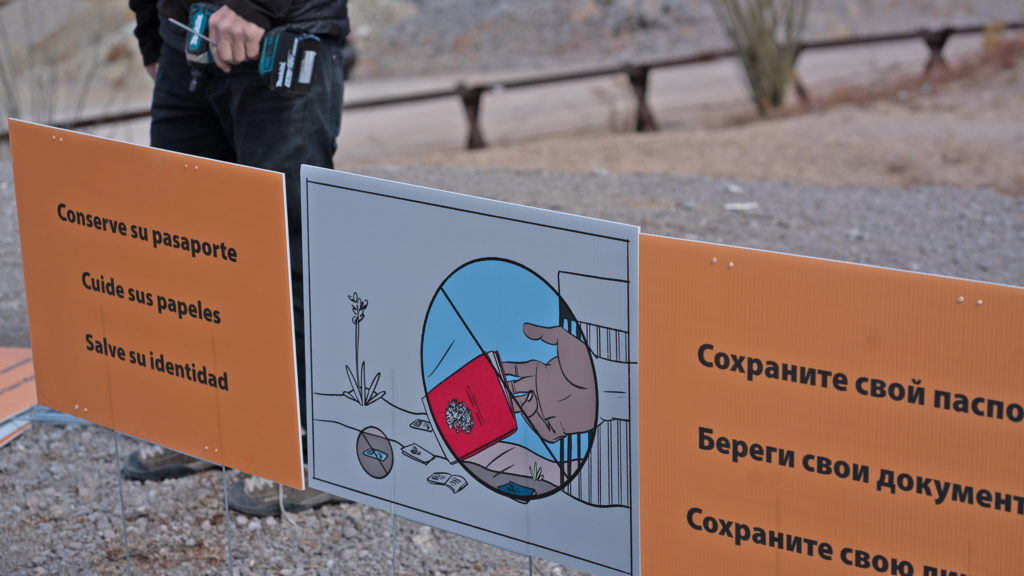
Professor David Taylor’s fall 2024 field-study class created border signs in different languages with the message:“Keep your passport | Guard your papers | Save your identity.” (Photo by Colin Blakely)
Mosley, a social justice-oriented photojournalist and now a School of Art adjunct instructor, said she spent the semester “trying to understand the desert from a spiritual point of view — how it’s continuously rebirthing itself and going through these renewal cycles.”
Jackson, a landscape-based, conceptual photographer, said it “would be powerful, even on a community level, for more people to have the experiences we had” to better grasp the borderlands’ beauty and challenges.
She and her fellow graduate students held a previous “Border as Network” exhibition in Tucson’s Pidgin Palace Arts in August 2025. Taylor also presented “COMPLEX” at Pidgin Palace in 2024.
As a whole, the three Hermosillo exhibitions bring together Taylor, Miranda and emerging artists from the School of Art to examine a region shaped by movement, labor, technology, migration, commerce and the environment.
Current graduate student Beihua Guo took this image of the U.S.-Mexico border during the fall 2024 field-study class.
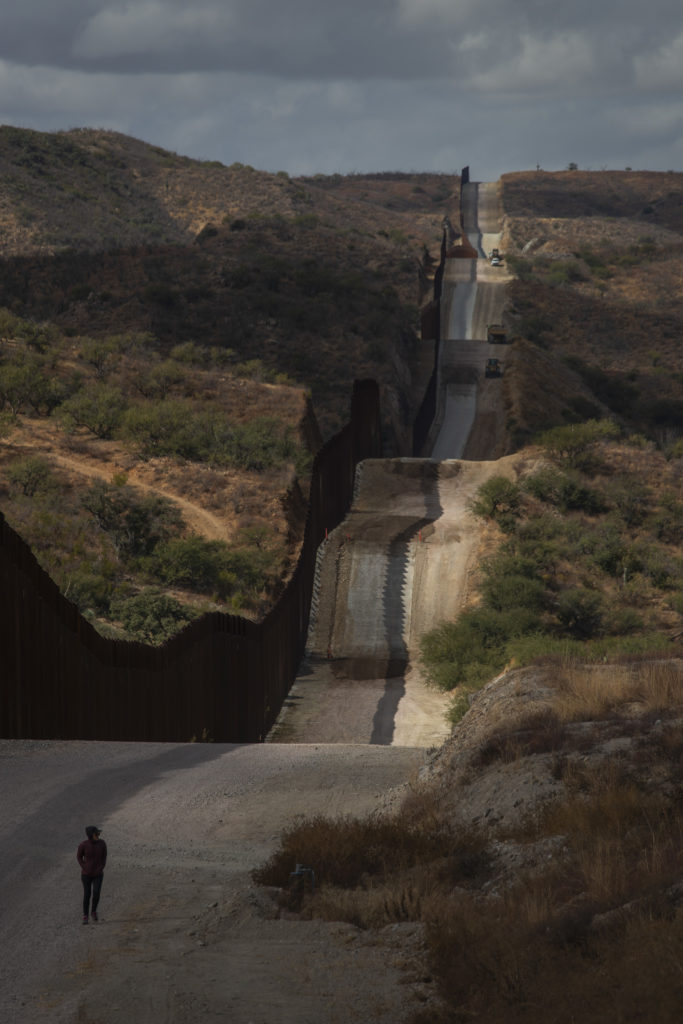
For Taylor and his students, the exhibitions are an extension of research conducted across the borderlands. For exhibition visitors, they offer different perspectives on a region that is often reduced to a political boundary but is, in practice, much more interconnected.
“I grew up in Tucson and have been to a lot of these places before, but I was really excited to take the class because I wanted to see them through a new lens … and really understand the systems that make up the border,” McDonald said.
Taylor has described his broader borderlands work and semi-annual field class as an effort to ensure that people’s experiences do not disappear.
“(It’s) about unflattening the narratives of the U.S.-Mexico border and the Sonoran Desert borderlands,” he said.
More info
• Museo de Arte de Sonora (MUSAS) directions
• 2026 FotoSeptiembre Sonora


